


Art and Music I and II
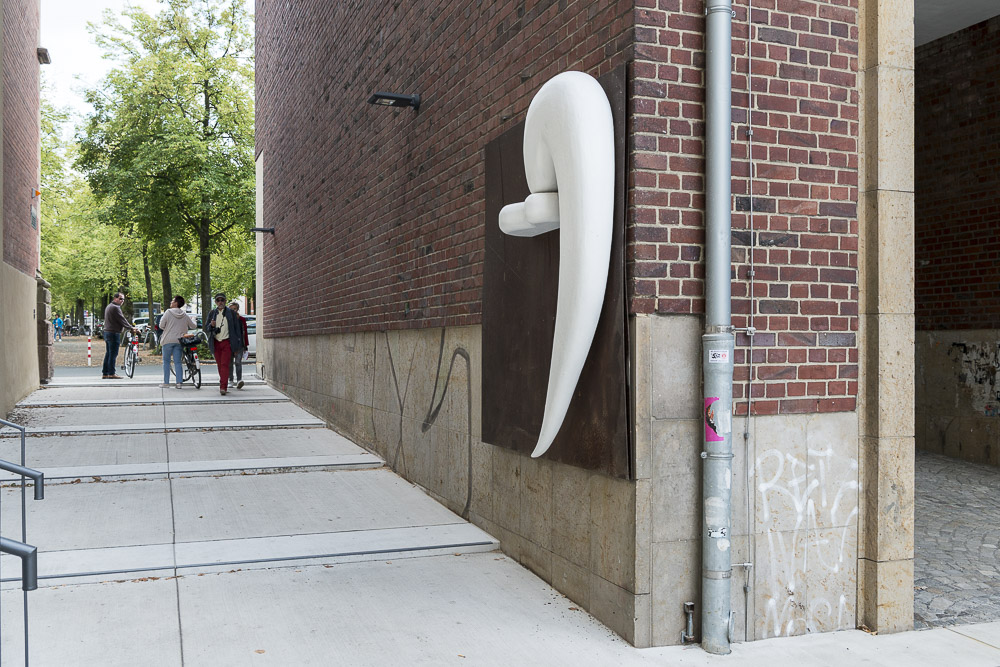
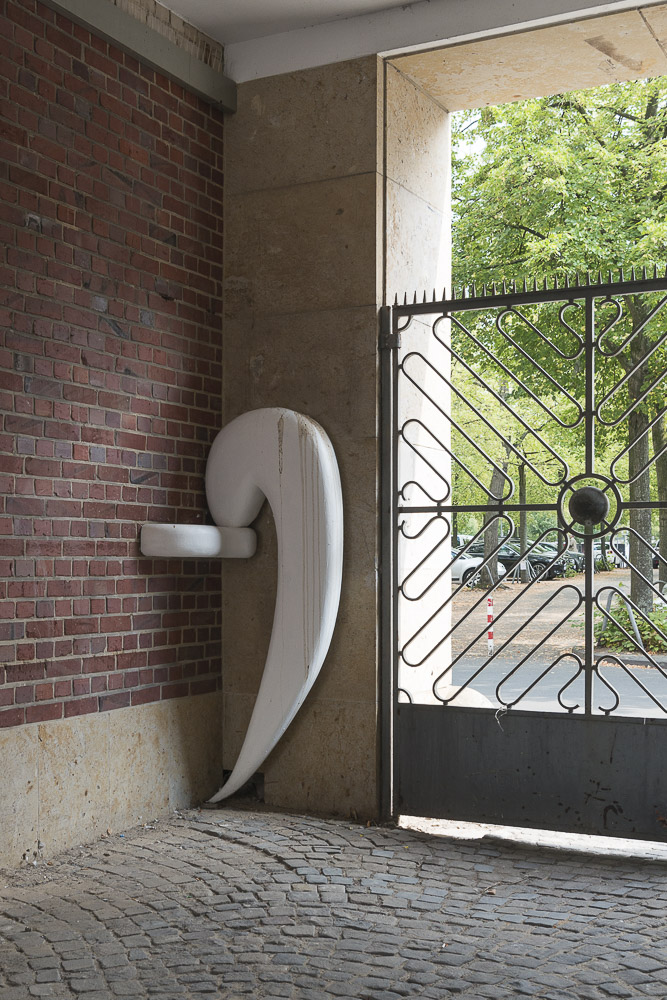
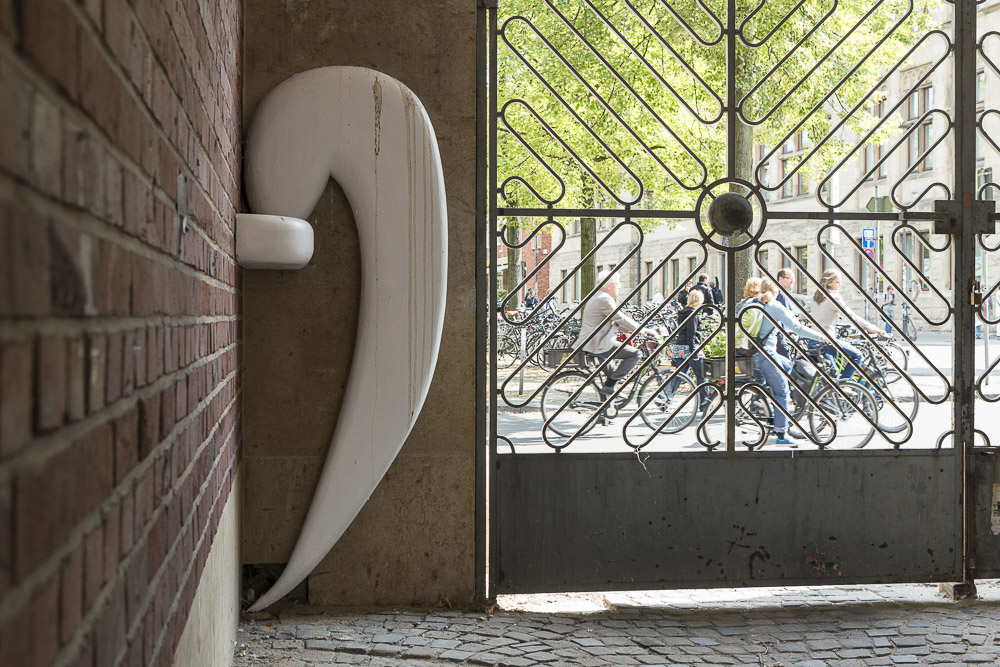
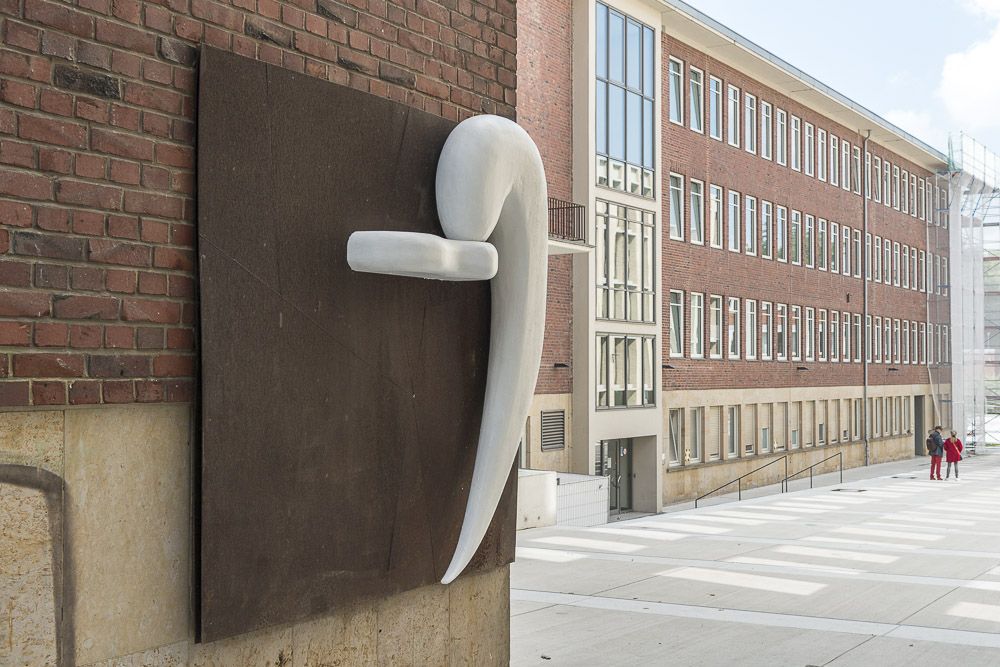
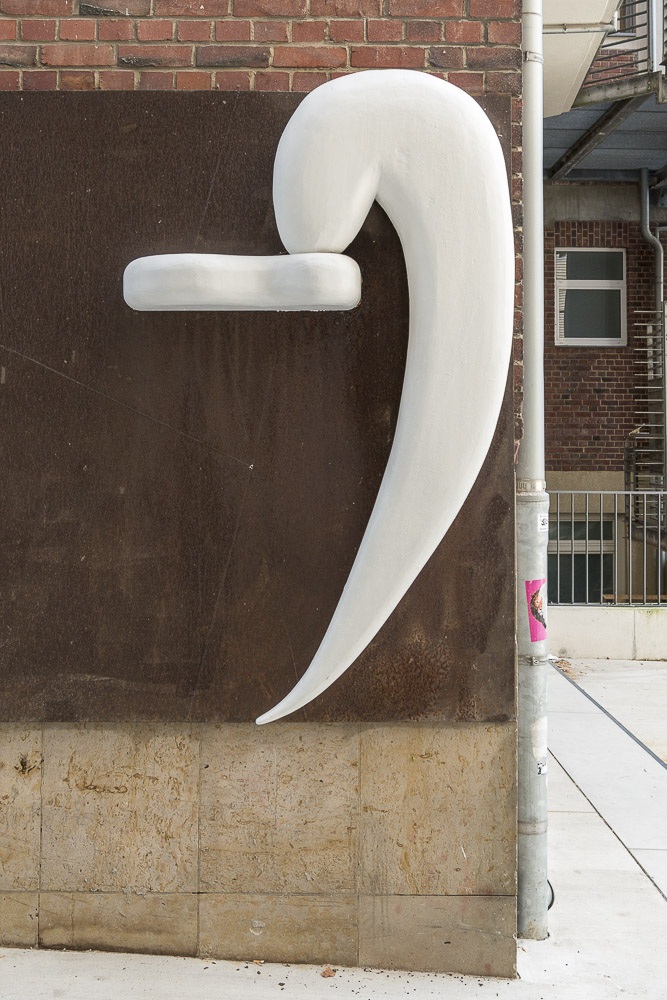
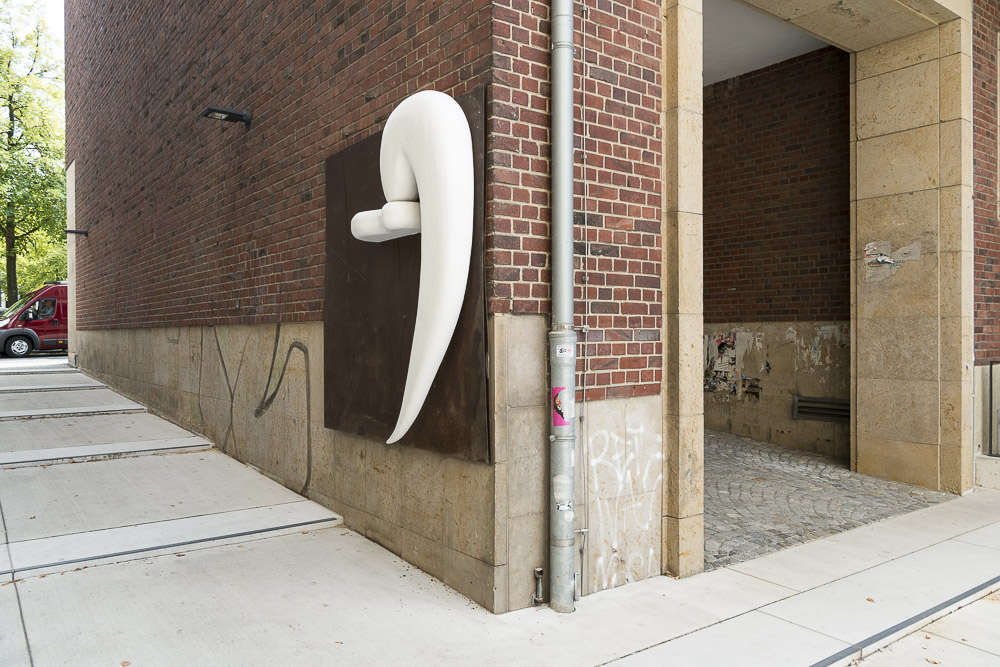
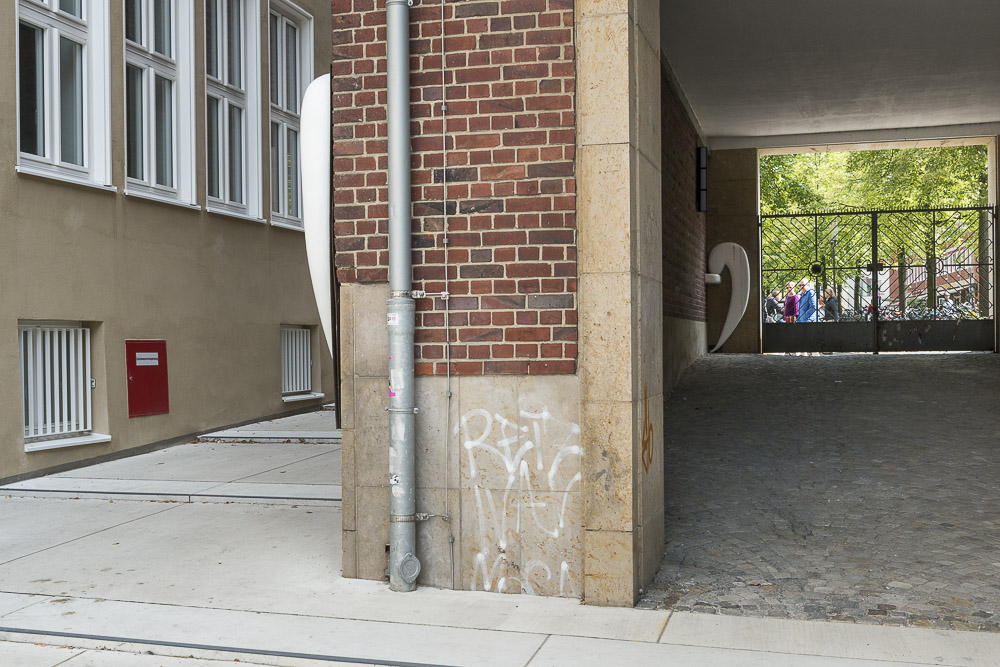
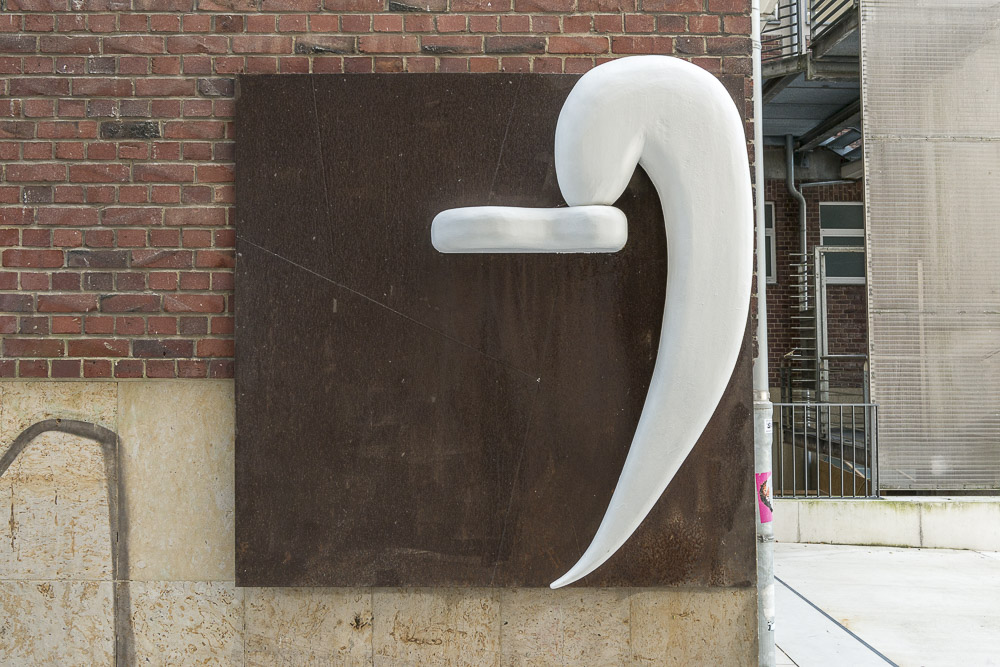
Richard Tuttle’s contribution to the 1987 Skulptur Projekte is made up of two parts that look the same at first glance, but possess completely different energies. The work is made more complex by the fact that the two elements can’t be seen at the same time. Installed somewhat inconspicuously in the passageway to the Fürstenberghaus, the philosophy faculty of Universität Münster, these sculptural elements are reminiscent of punctuation marks or clefs, each conveying a different tone. The two elements are made of white lacquered wood. They are both curved into the shape of a pointed bracket with a rounded head that appears to be balanced on a support. One of the elements faces inward in the corner of the passageway; the other is mounted outside on corrugated steel plates with its tip pointing outward. With this sculpture, the artist hopes that “a kind of platonic idea of balance can communicate itself.” Instead of the sculptures, the viewer should consider the energies of the location and the city.
Richard Tuttle
← Zur Startseite
Domplatz, Fürstenberghaus, 48143 Münster