Monument
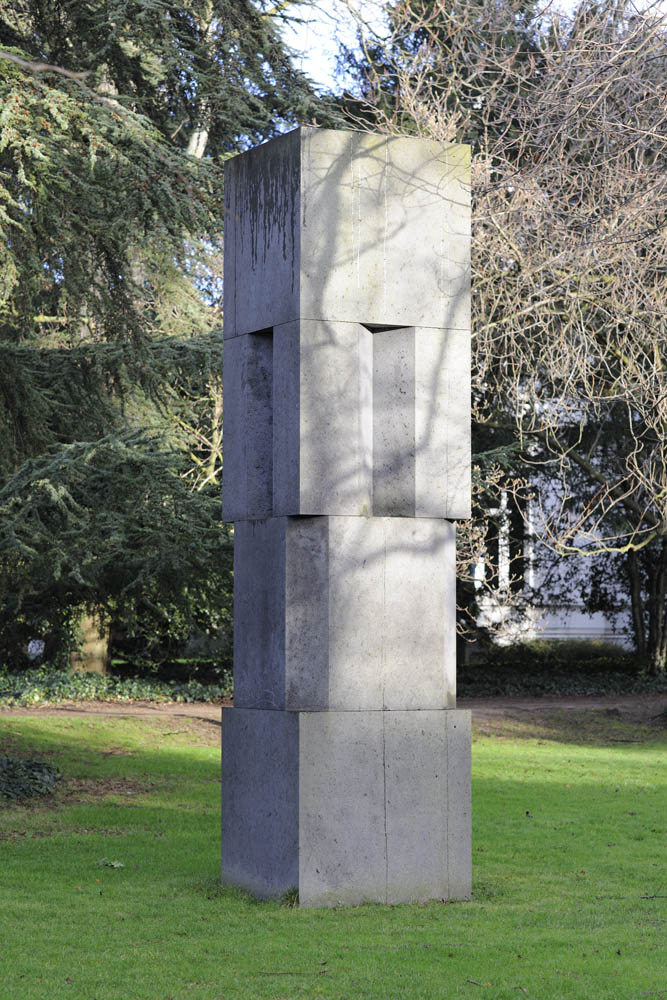
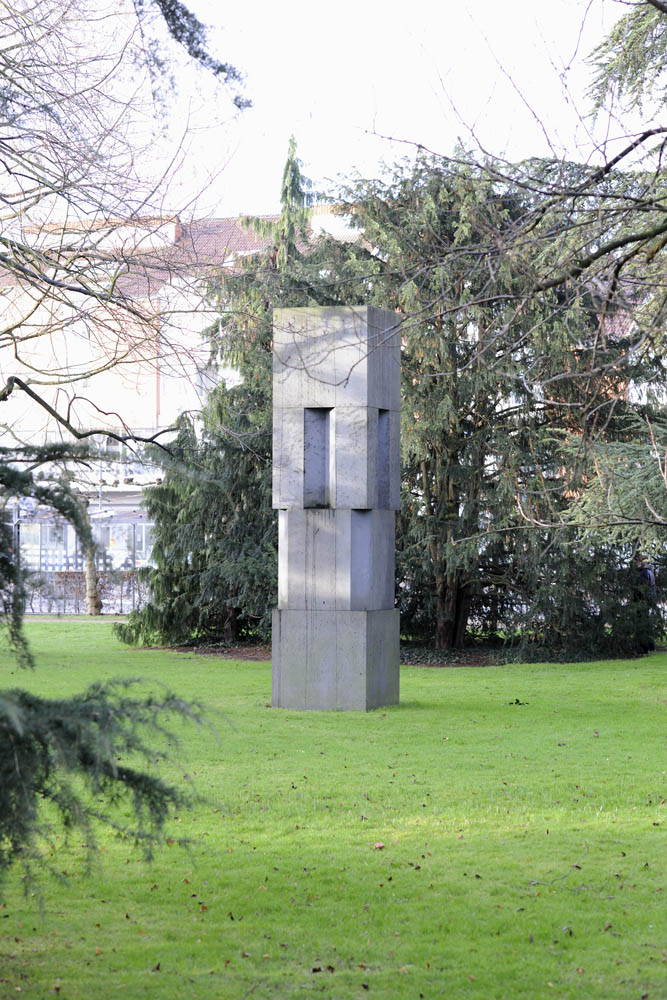
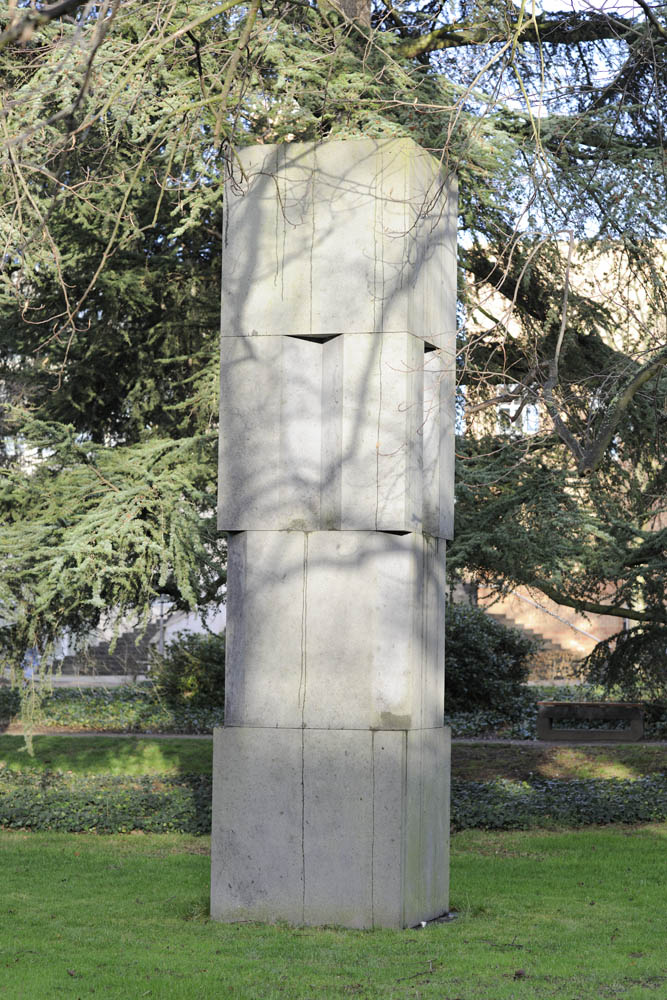
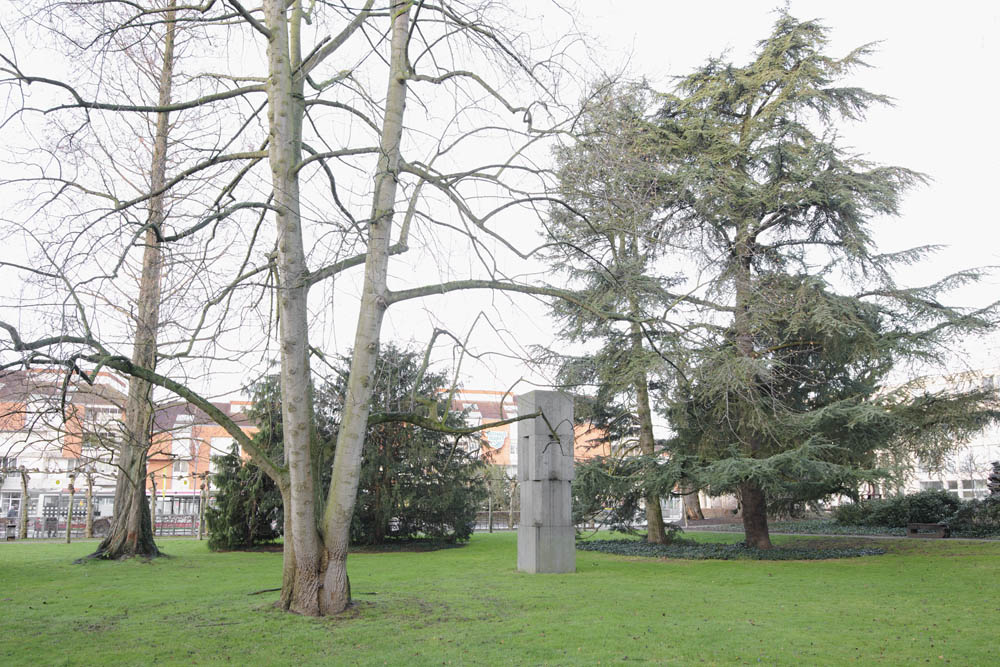
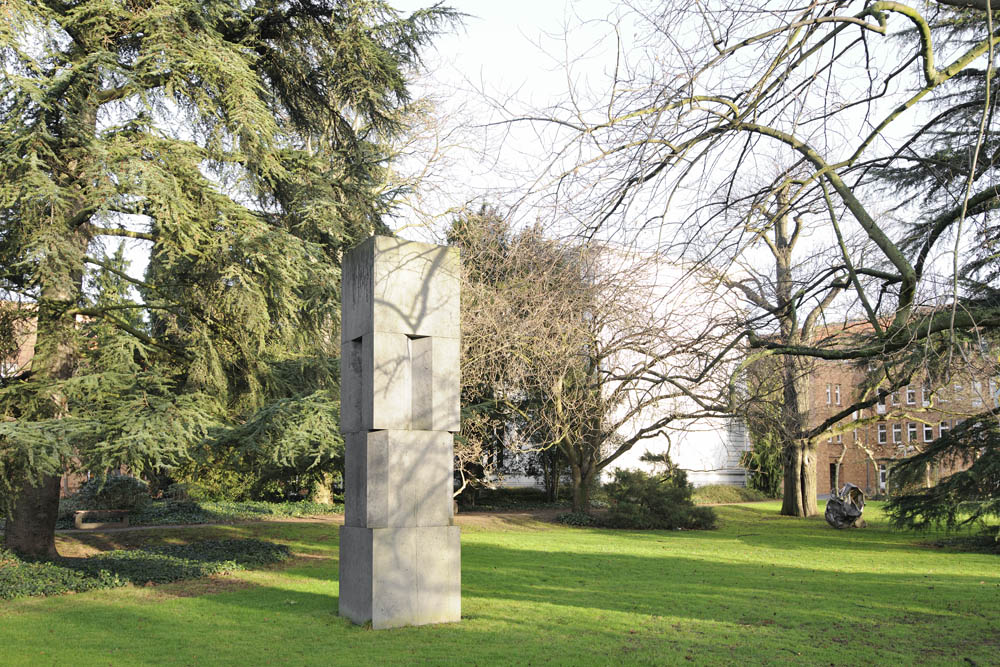
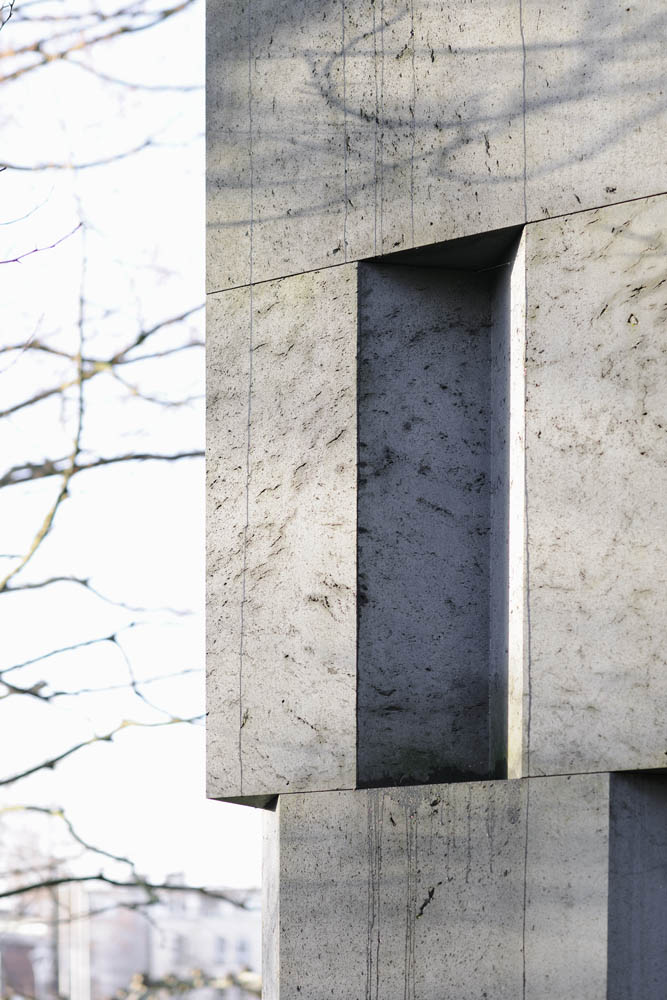
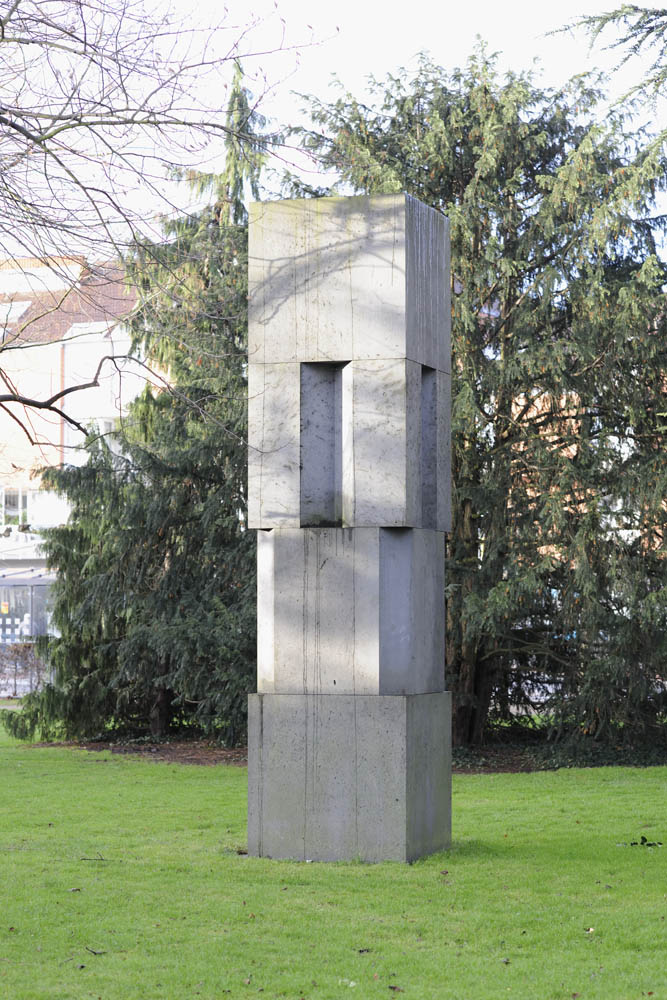
This 4.8-meter-tall sculpture is made up of four precisely sawed stone blocks with a side length of 120-centimeters. It was important to Heerich that his sculpture be hewed out of a type of stone that was connected to the local landscape, which is why he used Hohenfels basalt lava from the Eifel. These basalt blocks are stacked and anchored to each other, so that they visually remain as individual elements. The joint lines between them were spaced with lead bearings.
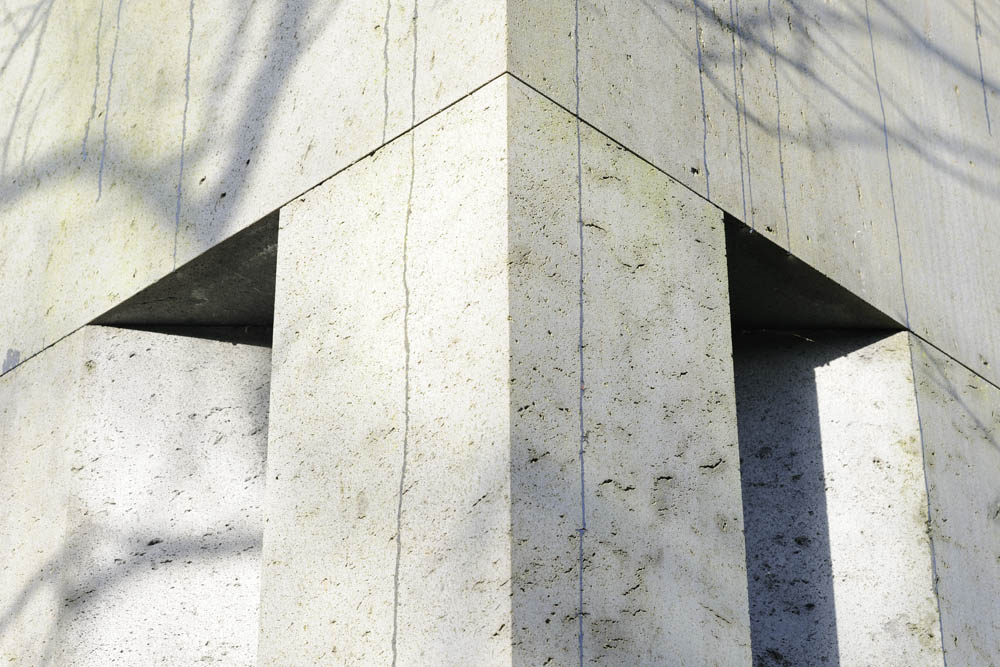
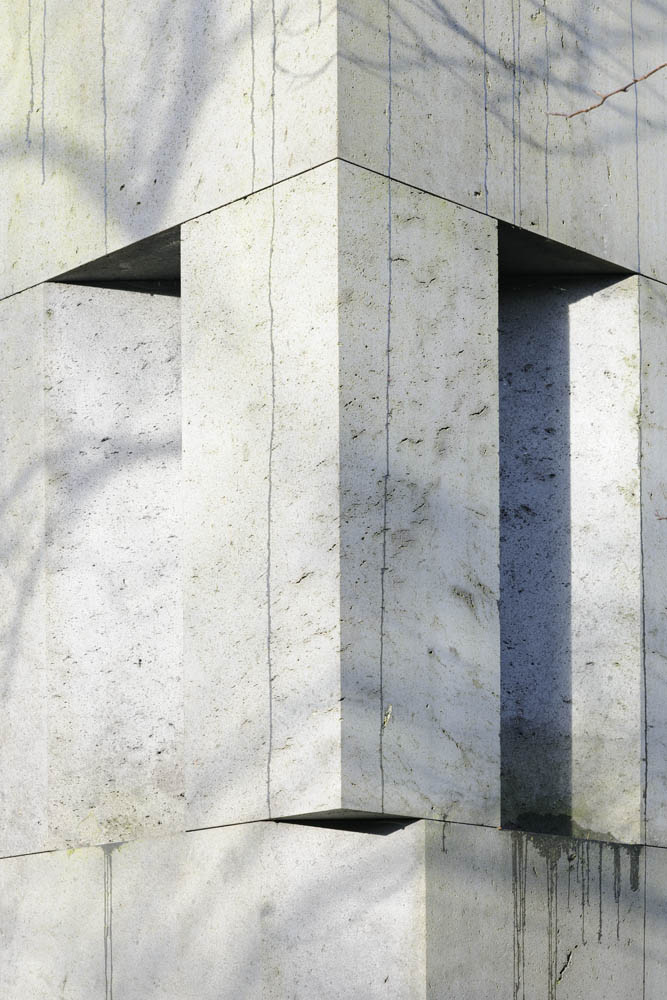
The top and bottom blocks remain in their exact cube shape; the two middle blocks have regularly spaced, precisely executed sculptural interventions. The second block from the bottom is beveled at the corners, giving it eight sides. The second block from the top has been cut in the middle of each side with a V-groove, dividing it into three parts. Here, two phases of the work process are visible: first, the production of each stone block; second, the sculptural interventions that were limited to the middle blocks. The cuts in the lower middle block give it the appearance of contracting or compressing, drawing a perfect analogy to the natural “faceting” of lava rock. In the third element, the cuts seem like divisions or a possible decomposition of the block.
The frontal view of one side of the stele shows the dimensional relationship between the individual cuts in the blocks. At the joint where the two middle blocks meet, the three cuts can be seen side by side. If all of the cuts continued throughout the stone face, the total width of the 120-centimeter surface would be divided into equal sections of 20 centimeters each. The changing surfaces are particularly apparent when circling the stele, as the alternating expansion and contraction in the two middle sections creates the impression of movement. The segmentation carried out on both of the middle blocks is reminiscent of a triglyph from a Greek Doric order temple. However, Heerich succeeds in creating a form of dialogue that defines the overall sculpture and gives it life.
This work can’t truly be called a “stele.” Heerich’s sculpture is more of a “building,” but one that invites you only to contemplate its outer forms, not step inside. The architectural and the sculptural are closely linked in Heerich’s work. Both aspects enter into an open dialogue with the surrounding nature of the park. In this way, as Heerich describes it, the stele amidst the trees seems “far less massive than in an open space,” but will also change color when it rains. “From the current gray, the color turns dark.”
Additional information: www.publicartwiki.org/wiki/Kategorie:Verzeichnis_Viersen
Erwin Heerich
← Zur Startseite
Viersen, Rathausmarkt 1 (Park at the Städtische Galerie)