The Prophet
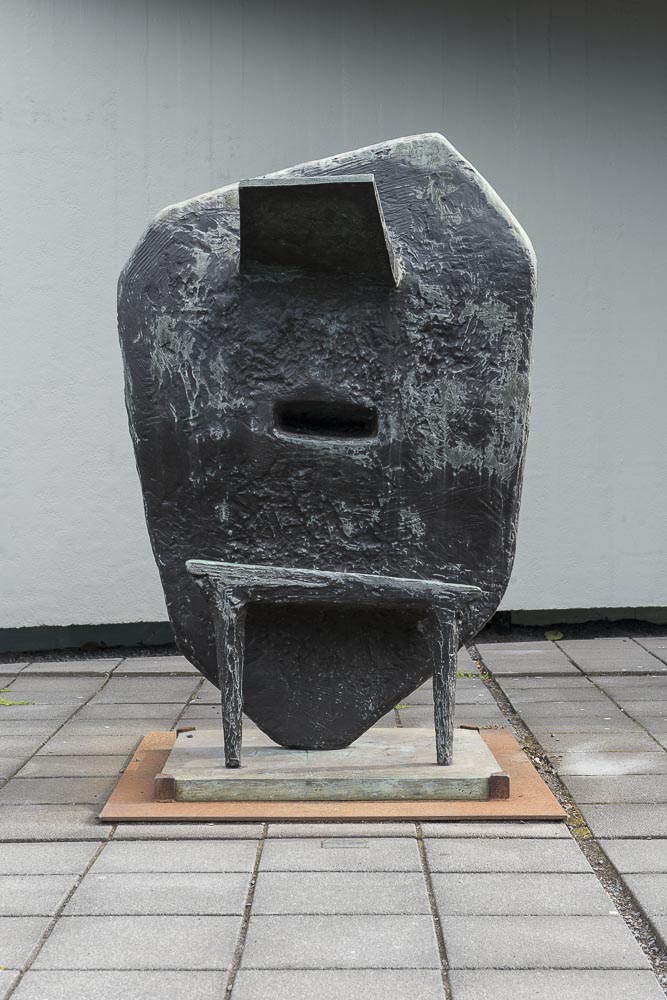
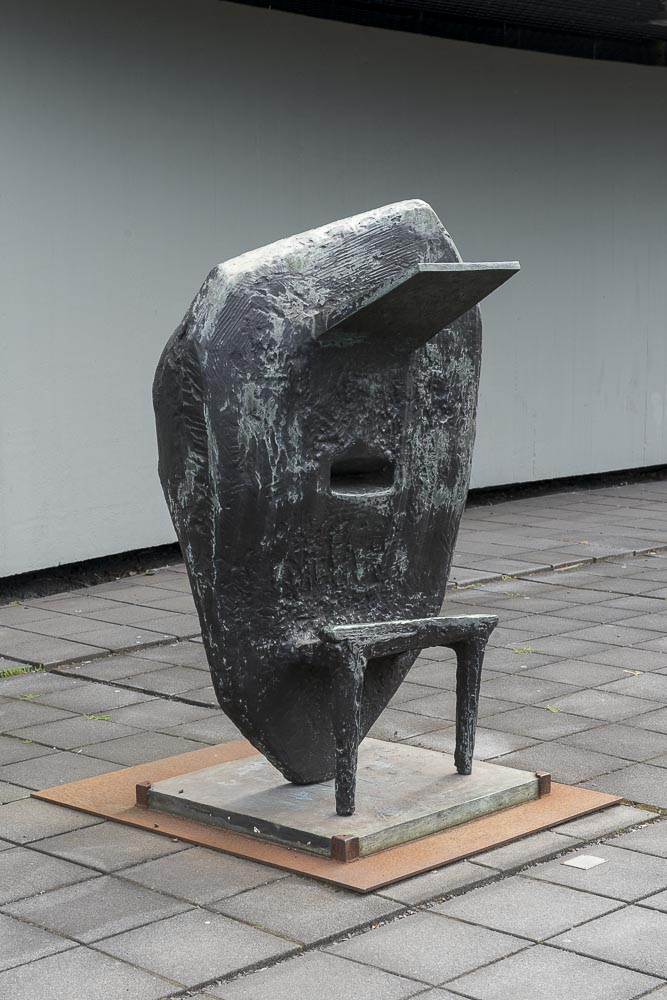
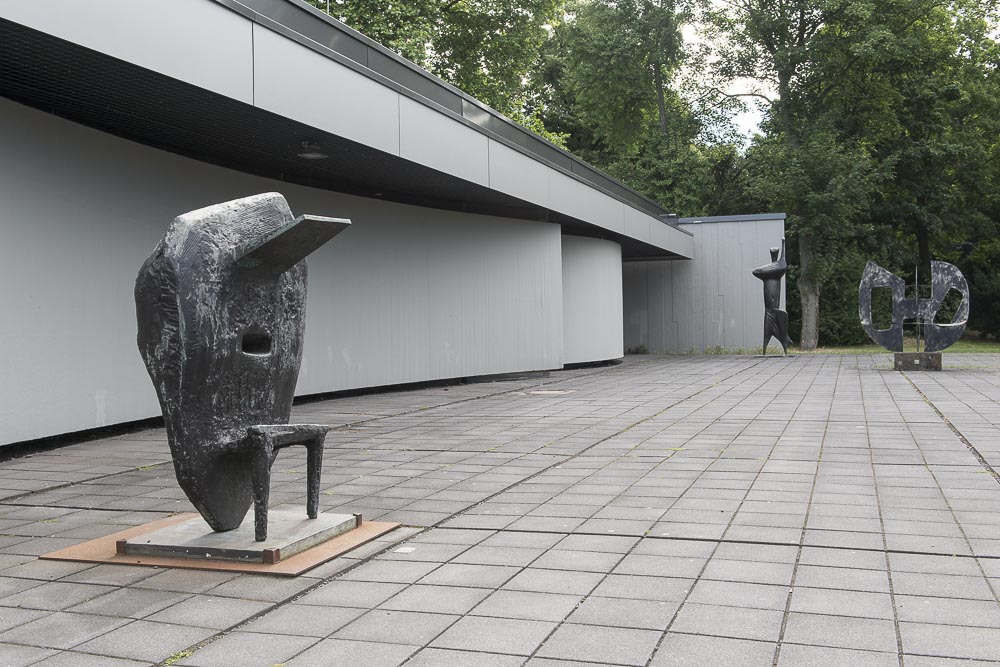
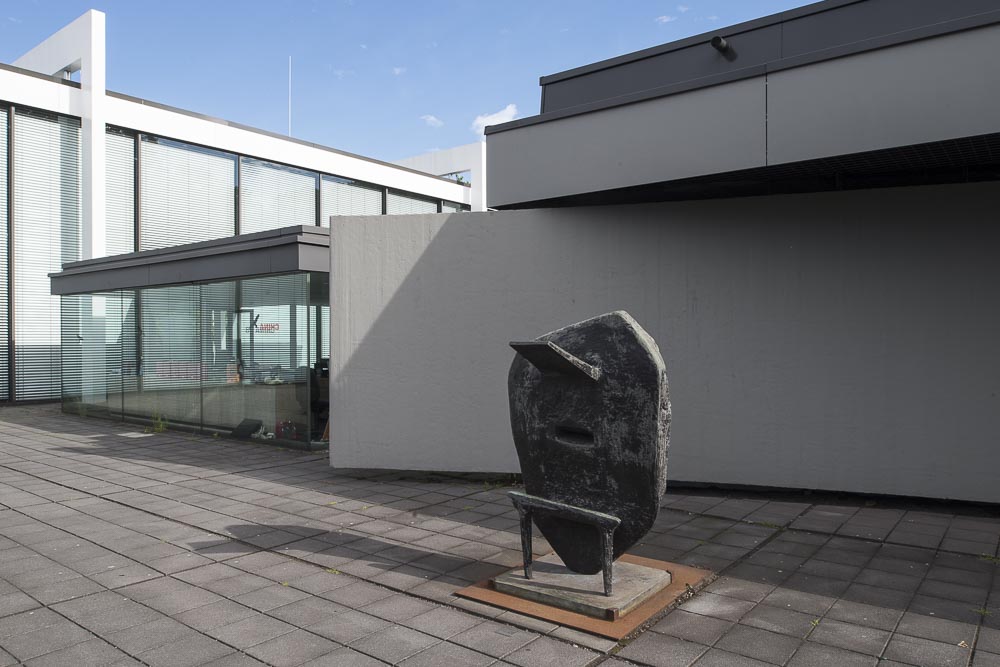
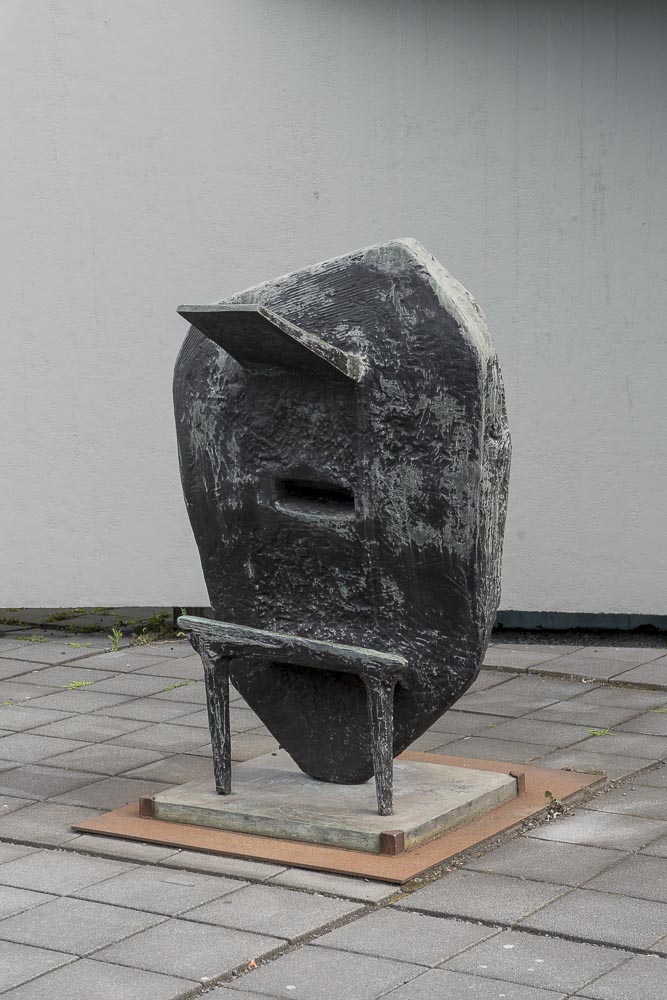
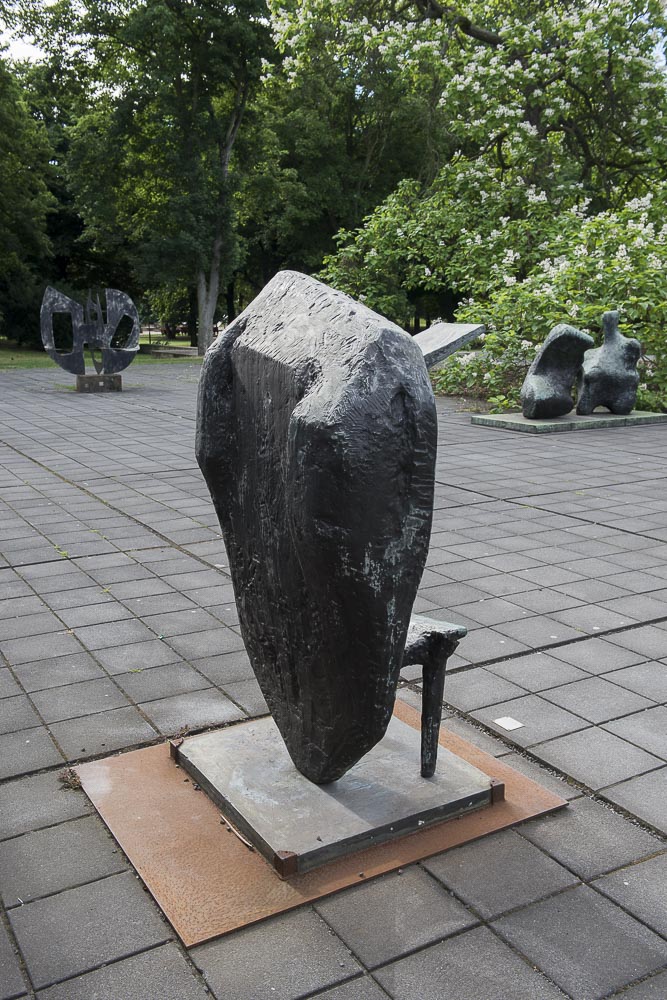
Kenneth Armitage was among the first generation of British sculptors who sought out new forms of expression after World War II. As a starting point, he looked to prehistoric art, such as the Lascaux cave paintings or the Cycladic idols, as well as tribal art from Africa and South America. He saw art as a form of direct understanding across time and space, regardless of background, language, or circumstances. The Prophet is an archaic looking object. Propped upright against a sort of bench, the hollow sculpture takes on the form of a large flat head with an irregular outline. Instead of a face, a rectangular slot and a projecting rectangular shape create the form’s basic structure. These can be perceived as architectural elements – a window and roof – and also as human facial features – a nose and mouth. In either case, they represent a type of communication between the closed form and its surroundings, as the object opens inward and projects outward. The result is the image of an unnamed, culturally nondescript prophet who may be blind like the ancient seer Tiresias, but nonetheless takes part in an exchange with his surroundings.
Further reading:
StadtKunstFührer: Skulpturen im Duisburger Stadtraum, ed. by the Stiftung Wilhelm Lehmbruck Museum, Duisburg 2012, pp. 12/13.
Kenneth Armitage
← Zur Startseite
Lehmbruck Museum, Skulpturenhof, Düsseldorfer Str. 51, 47051 Duisburg