Grand Vitrail Cinetic
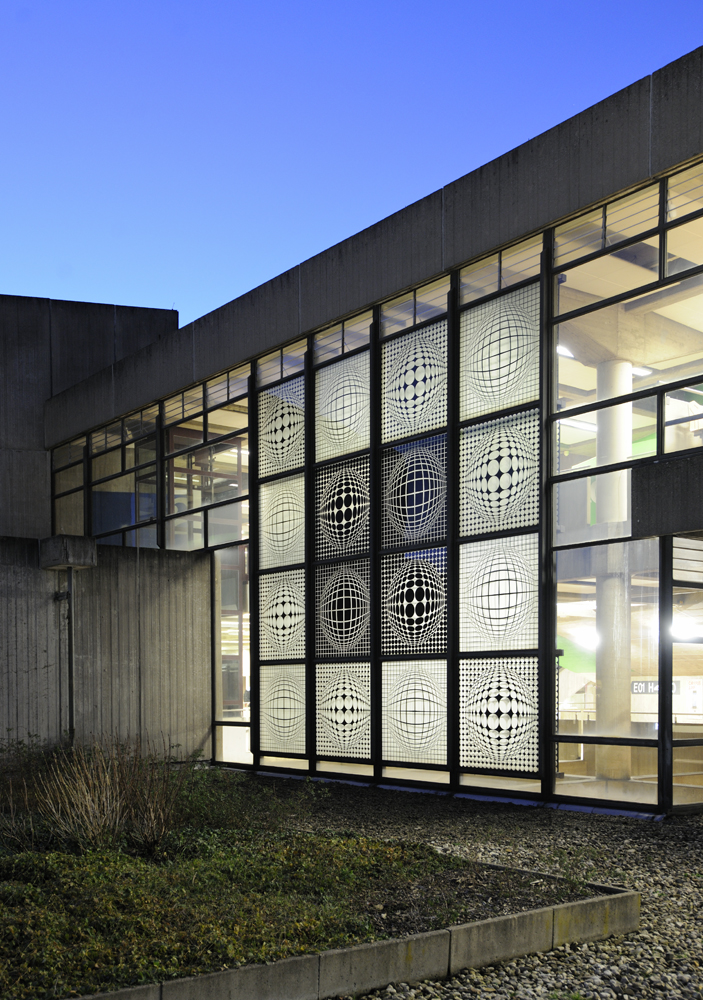
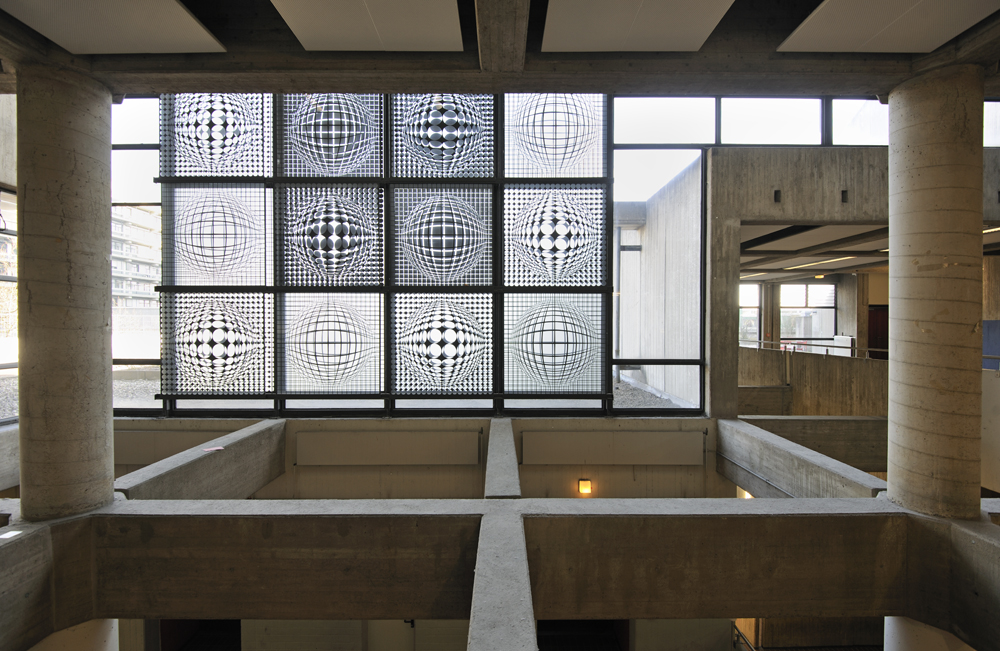
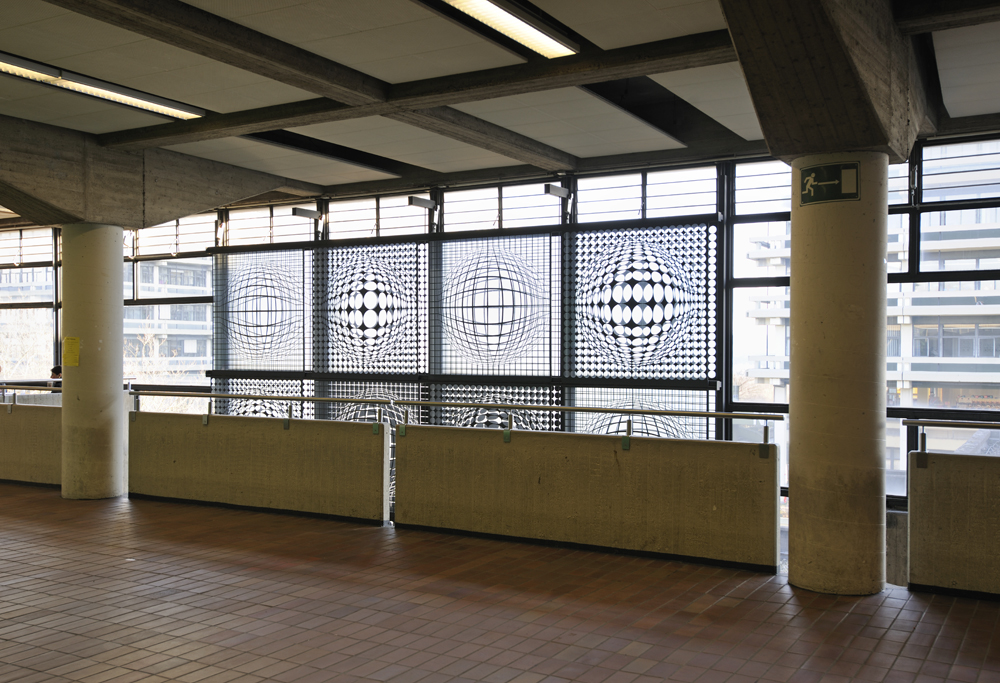
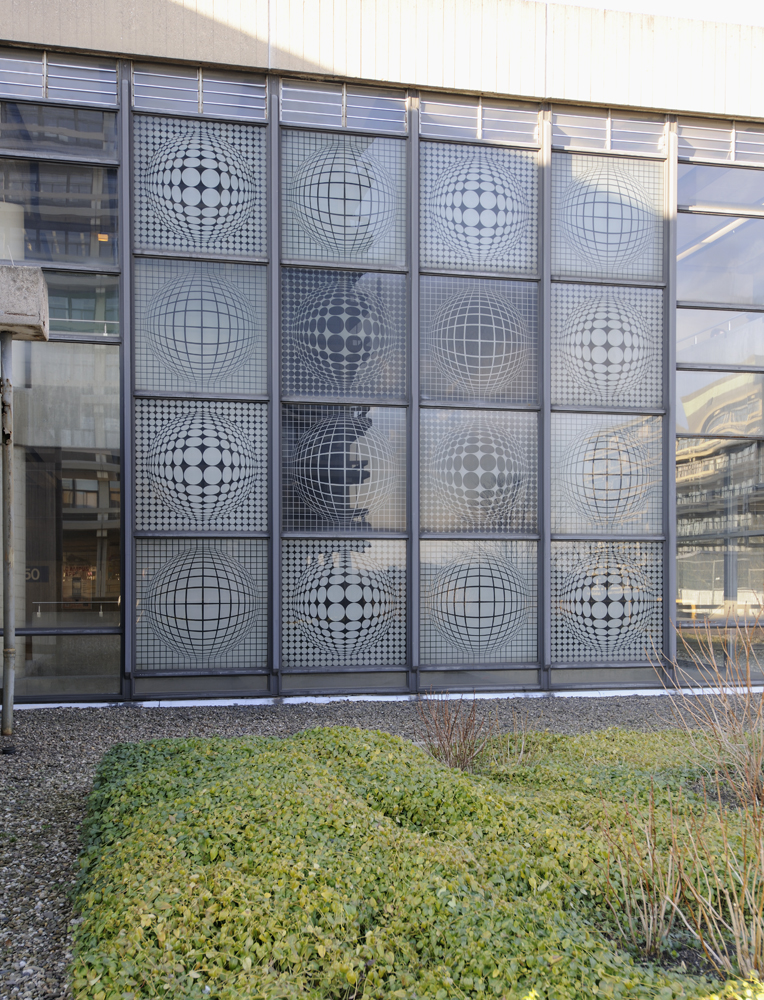
Op art co-founder Victor Vasarely’s Large Stained Glass Window was made for the construction of the Hörsaalzentrum Ost at Ruhr-Universität. It makes optimal use of the architectural details, while providing the building with a unique additional element. The double glass wall of the foyer area extends over two stories. Vasarely divided the wall into four by four square panels, which were screen printed with the optical illusions that are characteristic of the artist’s work.
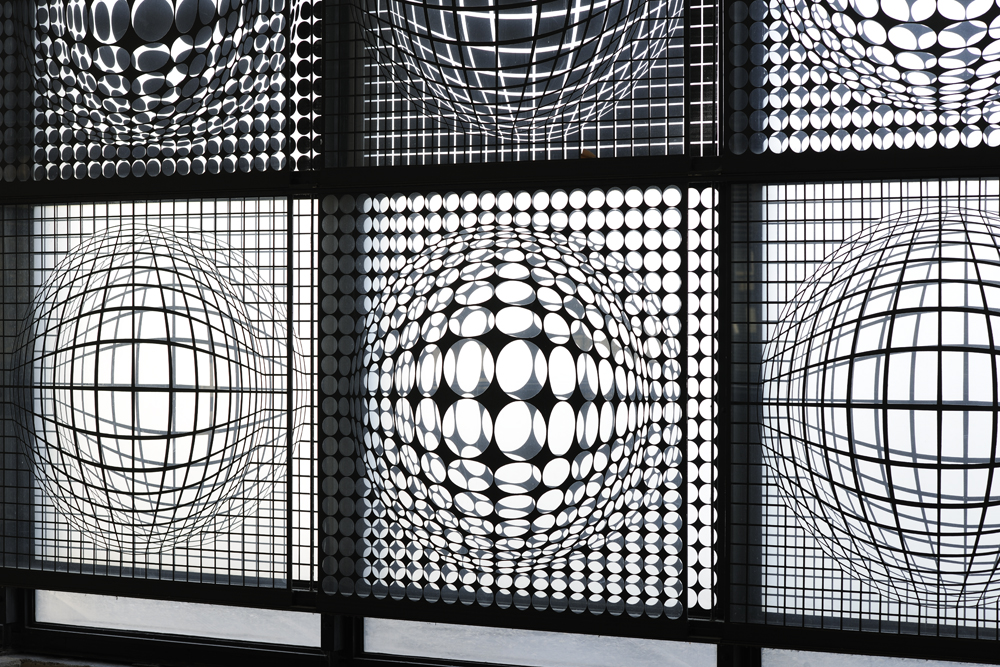
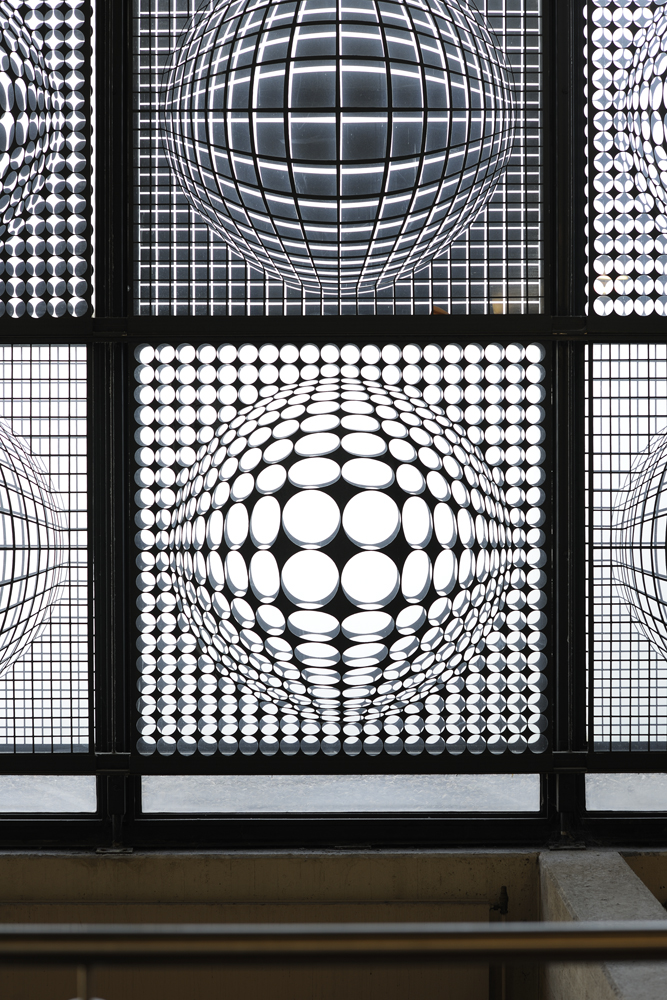
In each of the fields, detailed rectangular and elliptical shapes are arranged together, so that they form a protruding sphere. When walking past the facade, the spheres begin to look like they are turning. However, both the three-dimensional, as well as the kinetic effect are simply illusions created through the clever use of mechanisms of visual perception: they are actually two-dimensional images.
With this work, Victor Vasarely returns to a series of works he began in the 1950s: Blancs et Noirs. As the title would suggest, these works are entirely black and white, experimenting with positive and negative forms instead of color. The middle four squares of the glass window are designed as negatives of the surrounding fields. Overall, the work is made up of variations of two basic shapes: a sphere based on a rectangular shapes and a sphere based on circular shapes.
The artist consciously avoided incorporating any highly personalized elements in his window design. In turn, Vasarely’s systematic work fits perfectly with the Ruhr-Universität architecture, which was built from 1964 to 1984 using prefabricated components.
Further reading:
Public Art Ruhr. Die Metropole Ruhr und die Kunst im öffentlichen Raum. Eds. Walter Smerling and Ferdinand Ulrich on behalf of the RuhrKunstMuseen, Cologne 2012, ISBN 978-3-8632-134-0, pp. 194-195
Victor Vasarely
← Zur Startseite
Bochum, Ruhr-Universität, Hörsaalzentrum Ost, Universitätsstraße 150