Le temps déployé / The Expanded Time
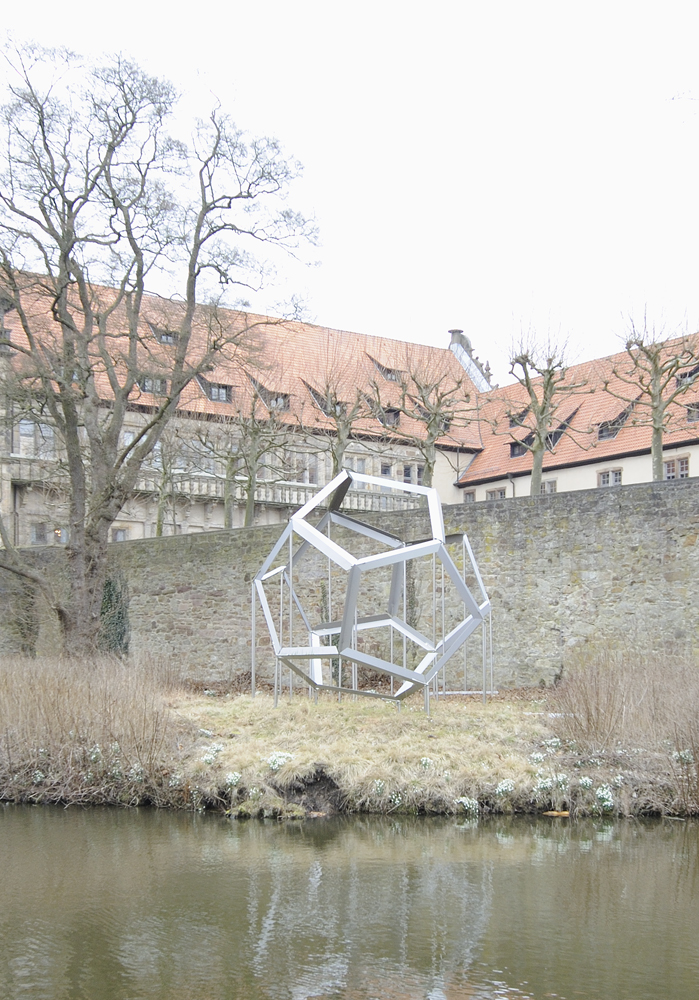
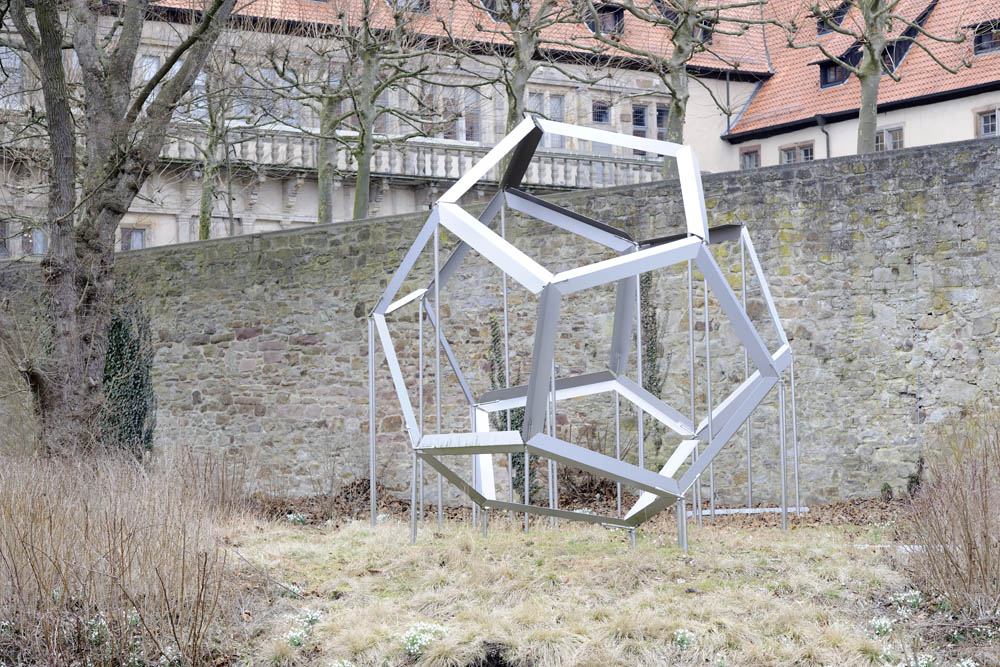
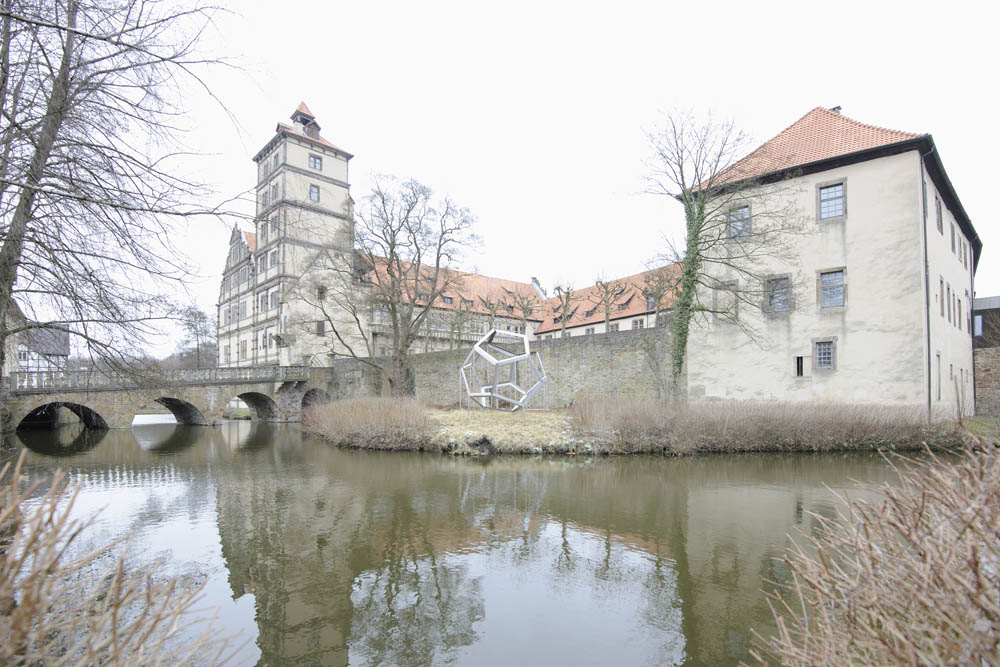
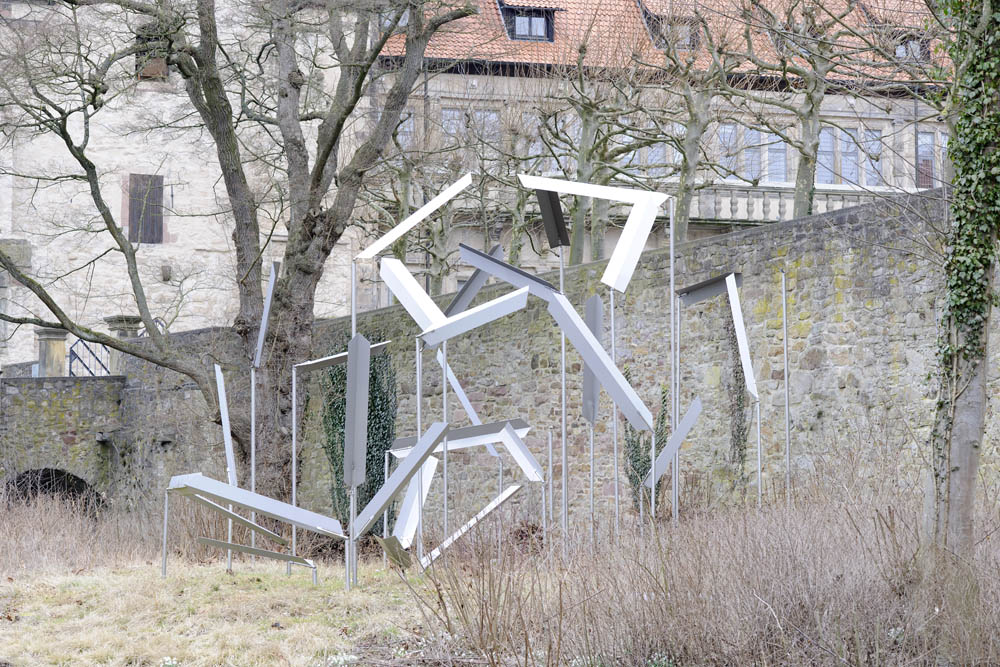
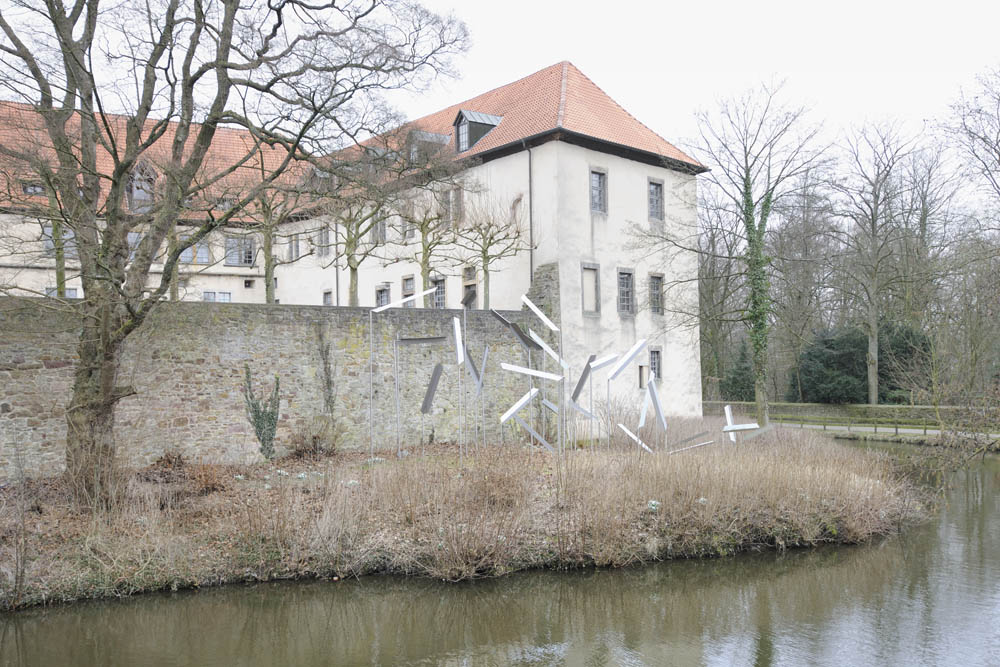
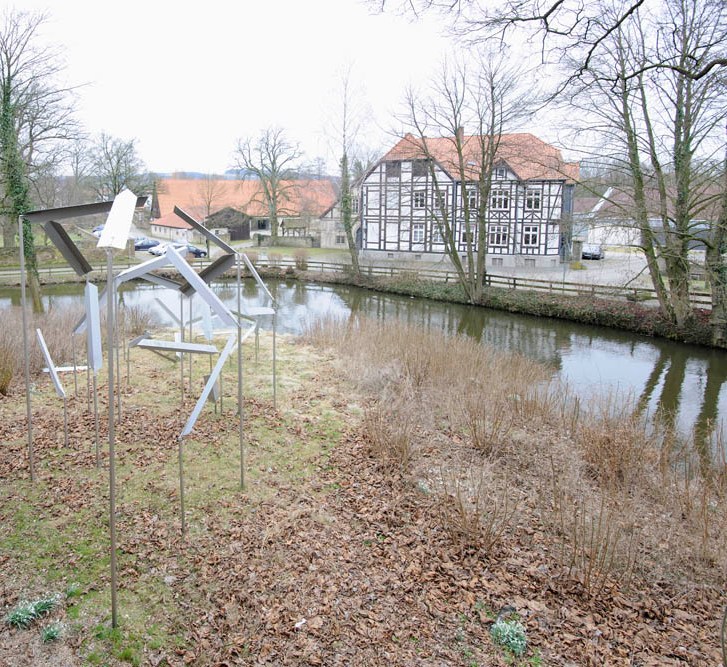
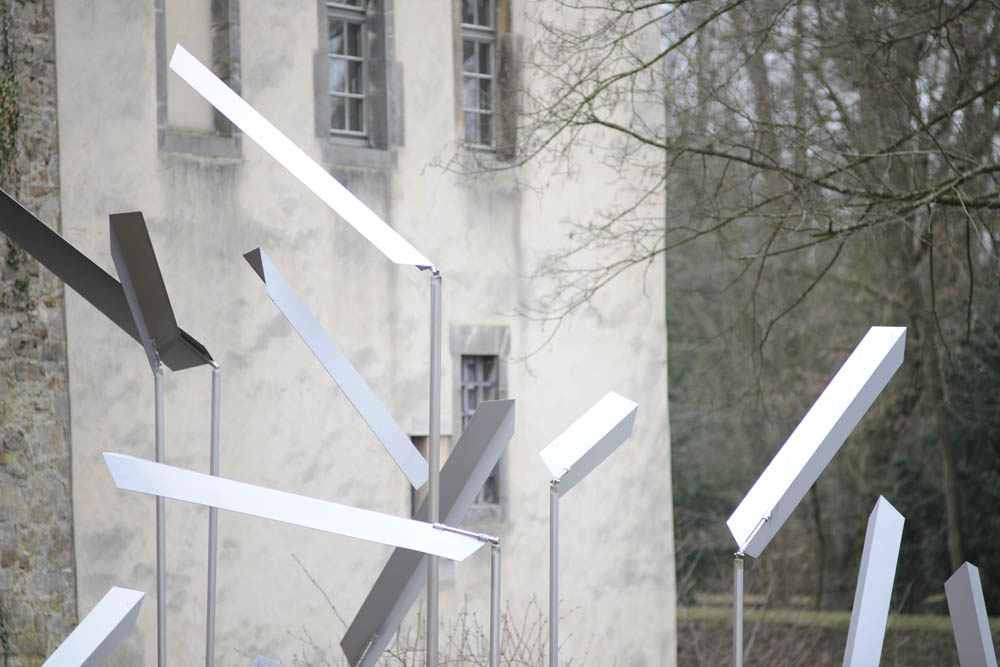
Anamorphic artworks only reveal their true intent to the viewer from a specific vantage point. In this respect, they could only emerge in the Renaissance with the development of perspective constructions, particularly the central perspective. Thus, it is logical that this work — which implements the principle of anamorphosis in contemporary art — would be installed in front of Schloss Brake, a renaissance castle that houses the Weserrenaissance-Museum.
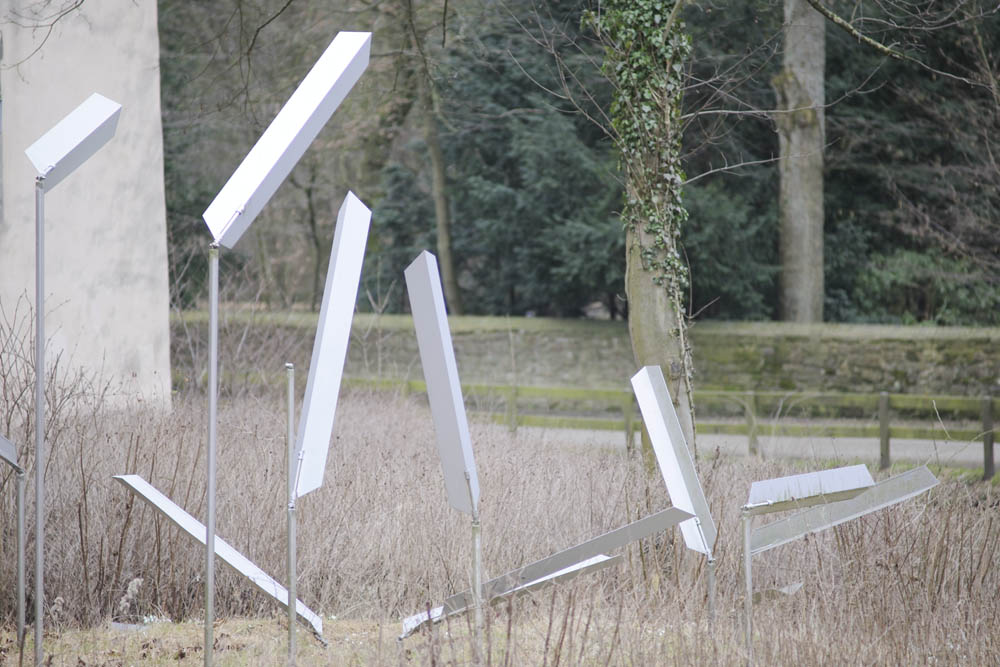
The sculpture looks different from every direction as a seemingly random arrangement of metal beams in space. The beams come together as a three dimensional geometric form when the viewer looks at it from a specific, precisely calculated vantage point. This dodecahedron made up of twelve identical pentagons also represents one of the five Platonic solids that were commonly depicted by Renaissance artists as part of their perspective studies (eg. Dürer, Melencolia I, 1514, contains a similar polyhedron). Perhaps these historical references have contributed to the naming of the work Le temps déployé or The Expanded Time.
Yves Charnay
← Zur Startseite
Lemgo, Schlossstraße 18 (moat at Schloss Brake)