Raum-Zeit-Plastik / Space-Time Sculpture

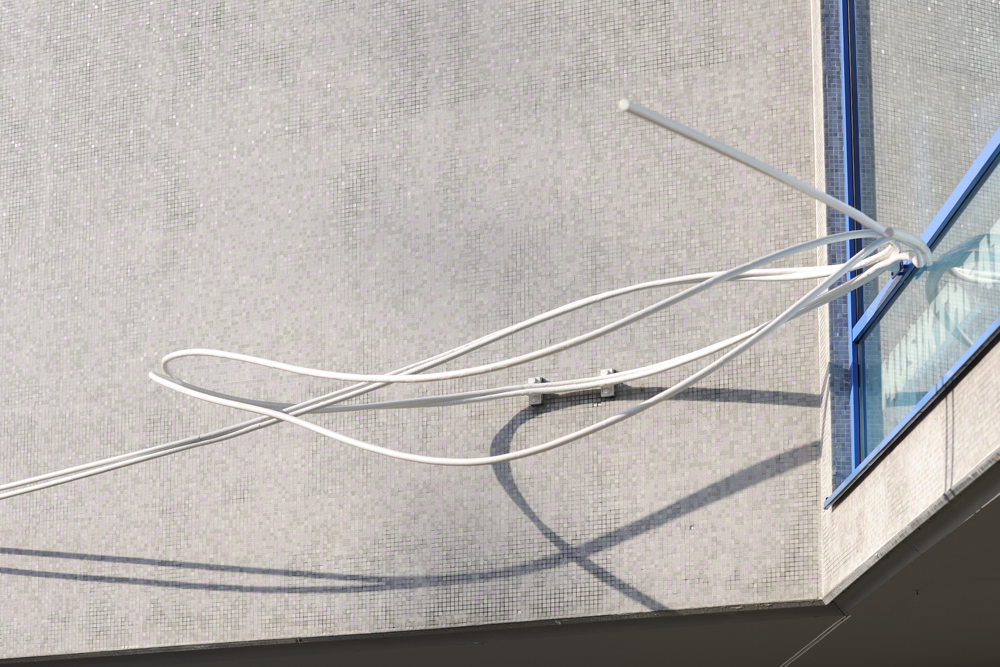
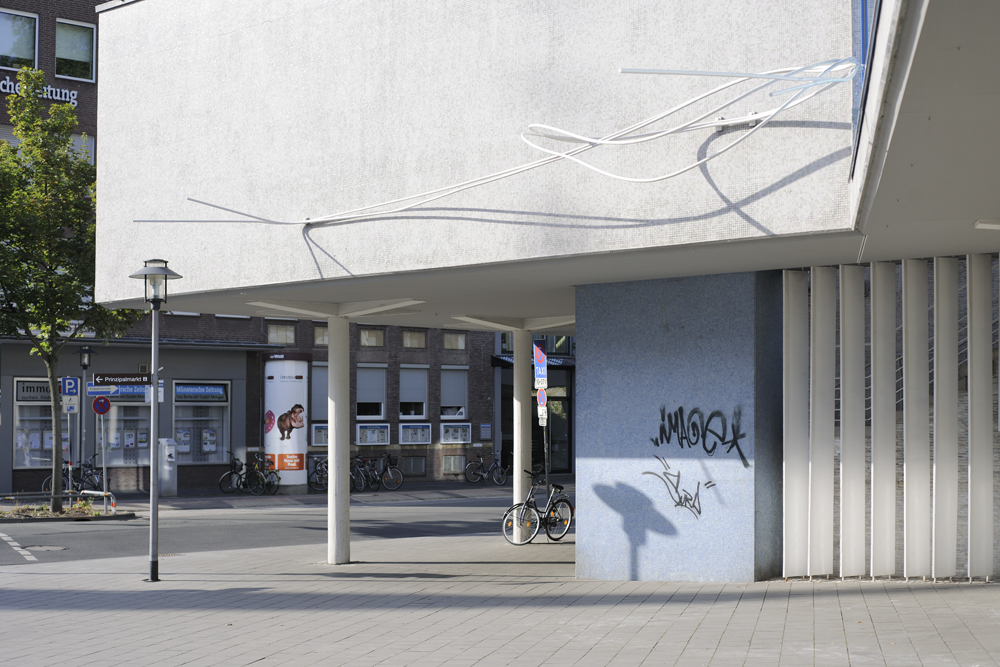
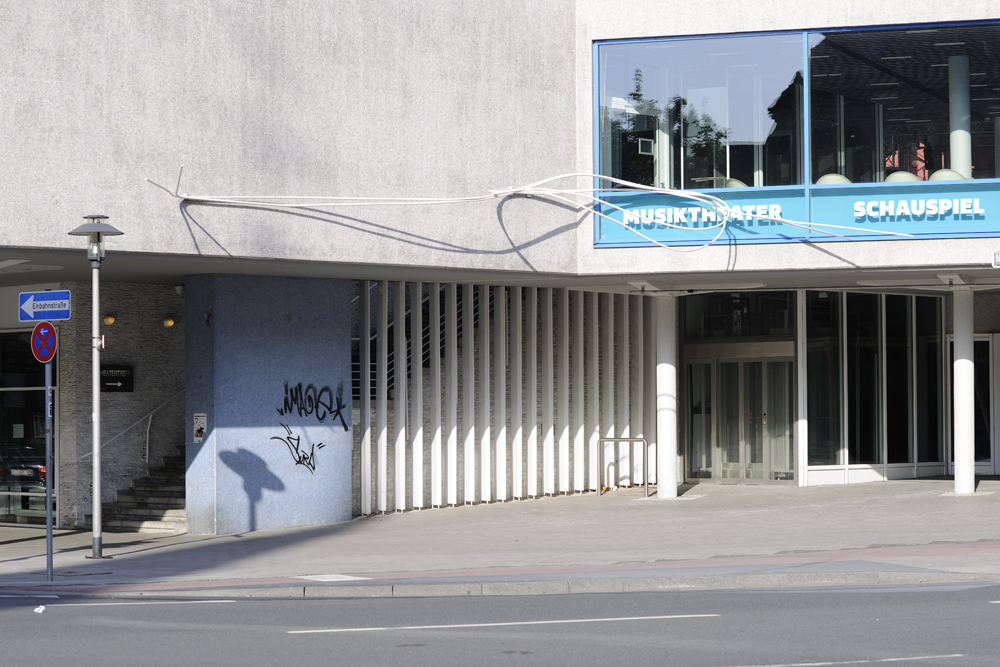
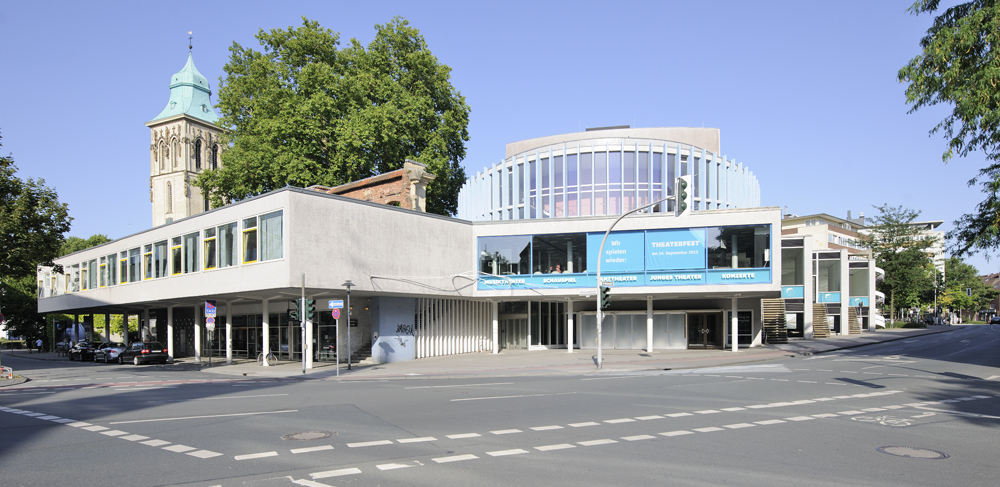
The Stadttheater in Münster was one of the first new theaters constructed after World War II. This work was created for the new building as one of Norbert Kricke’s earliest Space-Time Sculptures. and can be found along the facade.
The artist installed two thin metal tubes across a space where two parts of the building meet at an obtuse angle.The tubes extend out from the wall like a loosely wound loop, bridging the gap, and establishing a connection.
In his work, Norbert Kriecke strove to incorporate concepts of space and time as elements of sculpture. Space was represented through the inclusion of any gaps and open spaces as intrinsic parts of a work, and time was expressed through a sense of movement.
Additional information:
http://wiki.muenster.org/index.php/Norbert_Kricke
www.publicartwiki.org/wiki/Raum-Zeit-Plastik;_Norbert_Kricke
Norbert Kricke
← Zur Startseite
Münster, Facade of the Stadttheater (Voßgasse)