Slinky Springs to Fame
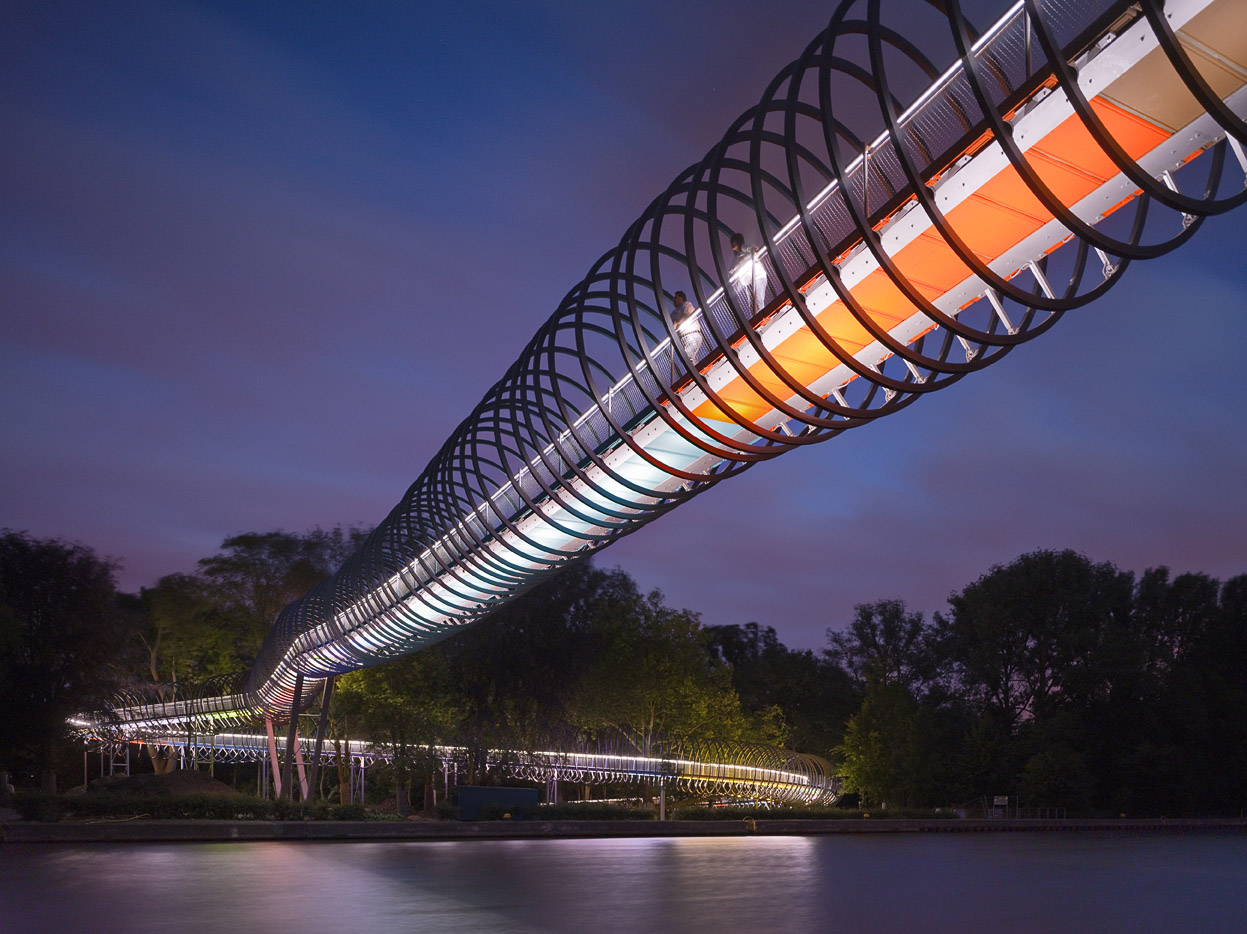
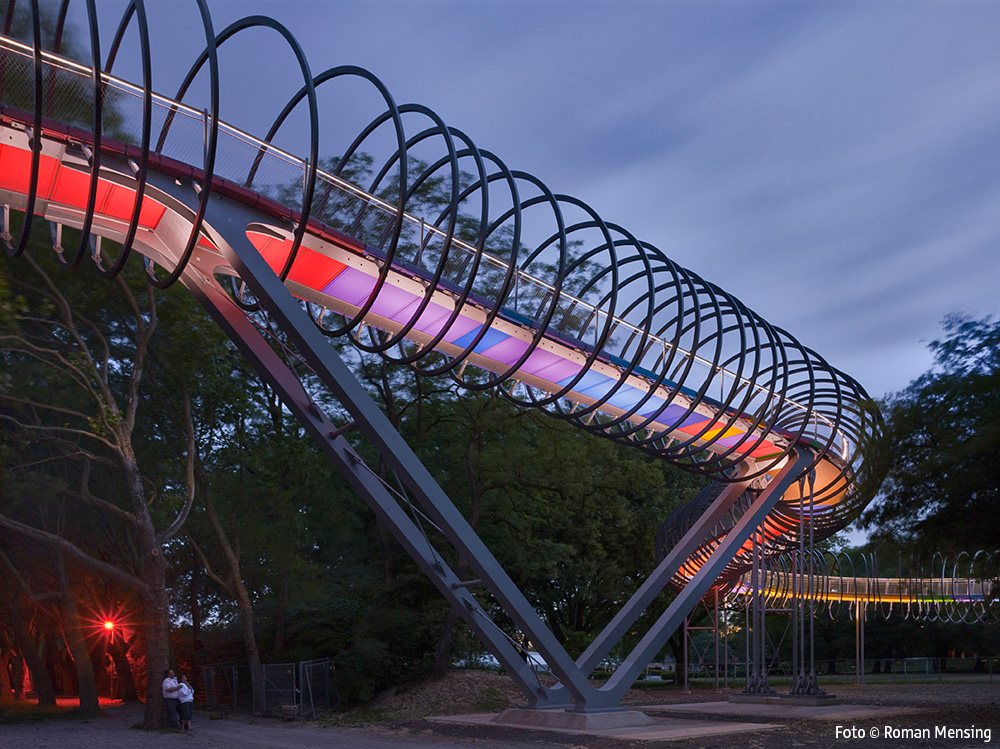
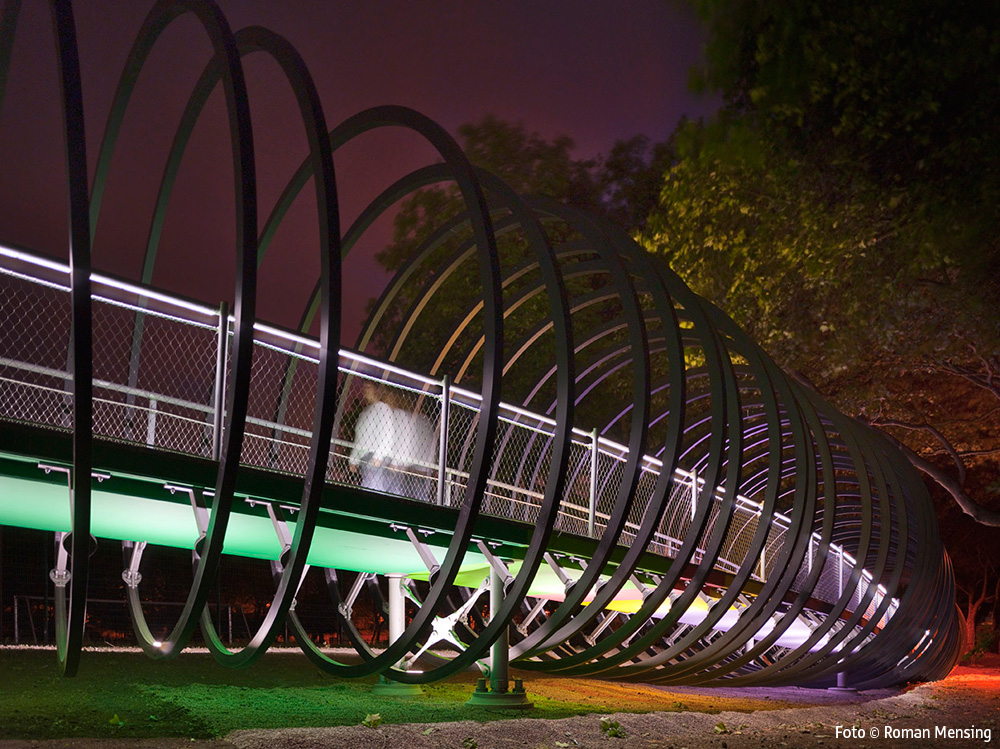
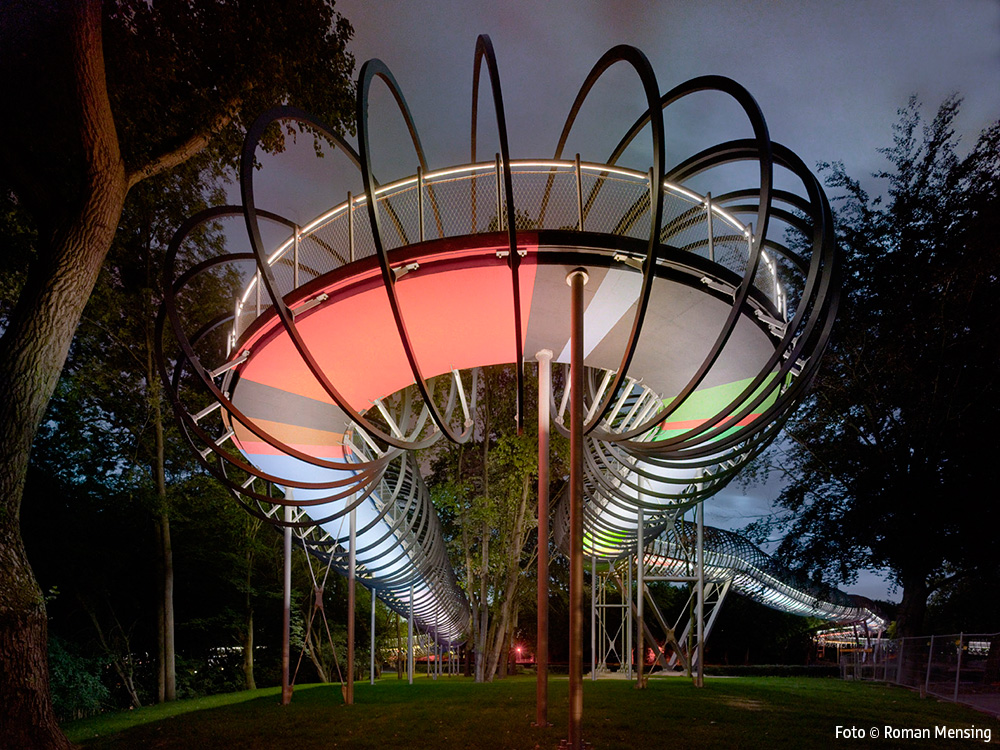
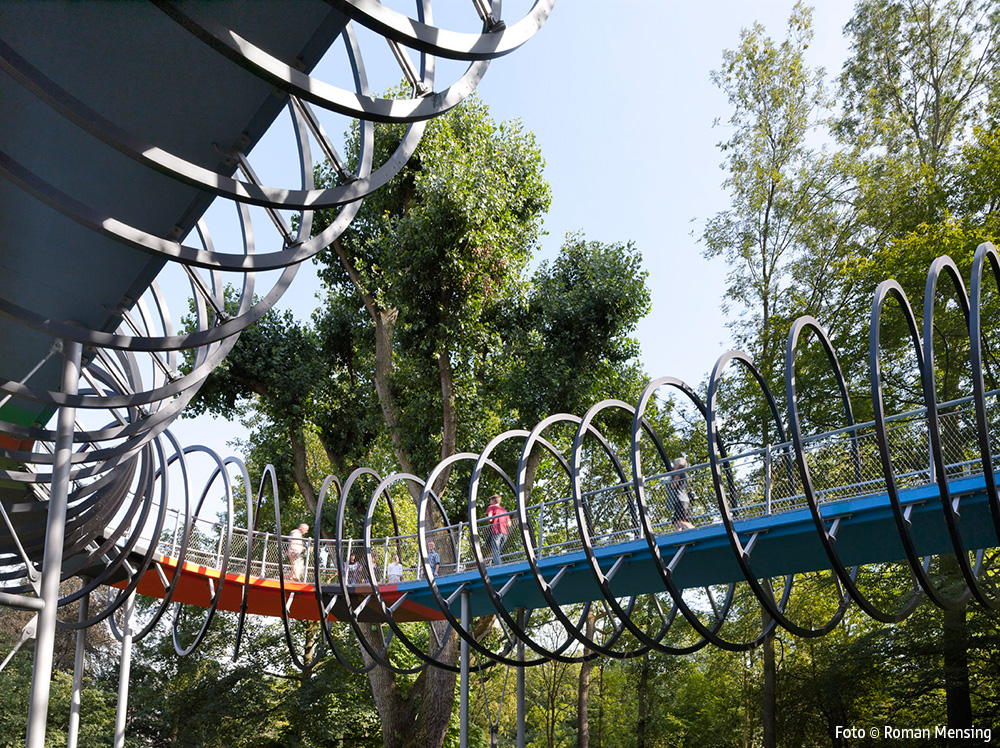
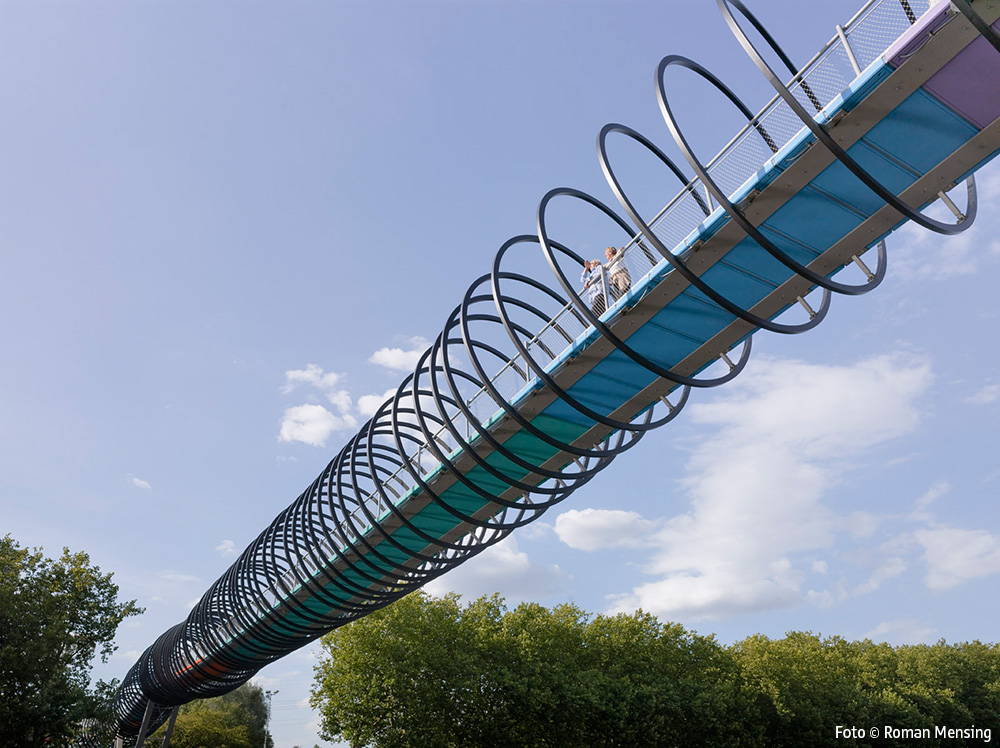
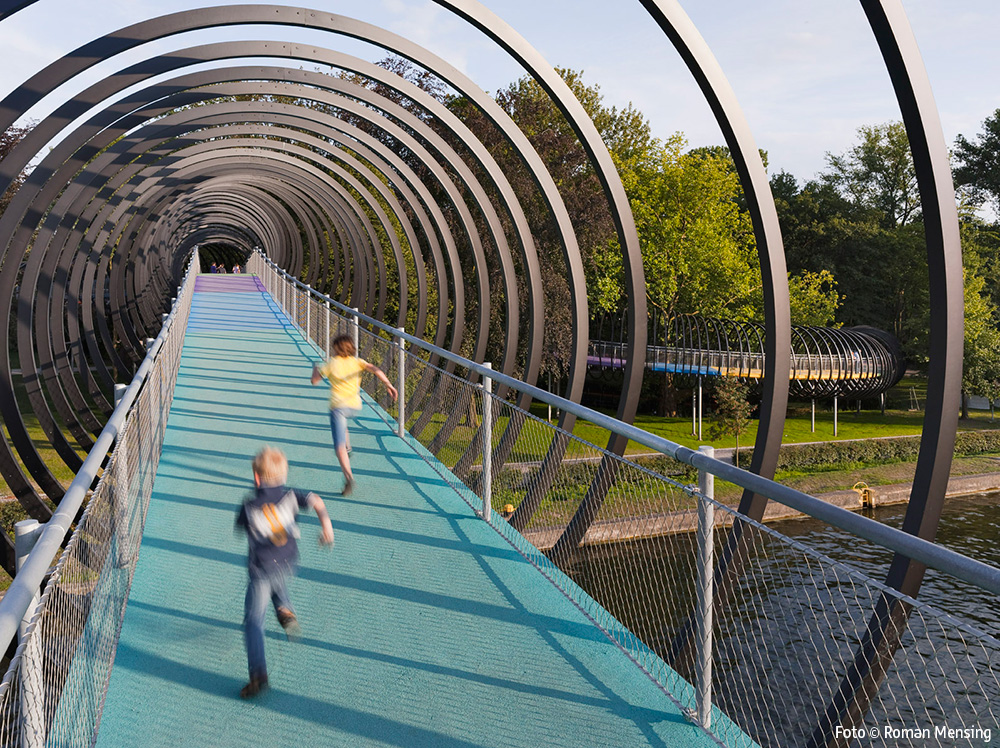
Slinky, the well-known children’s toy, was the source of inspiration for this bridge across the Rhein-Herne-Kanal. The long spiral spring was developed by American engineer Richard James in 1943 and has since reached international popularity. In line with James’ original, Tobias Rehberger’s bridge design incorporates an extended spiral that spans the canal in 496 turns.
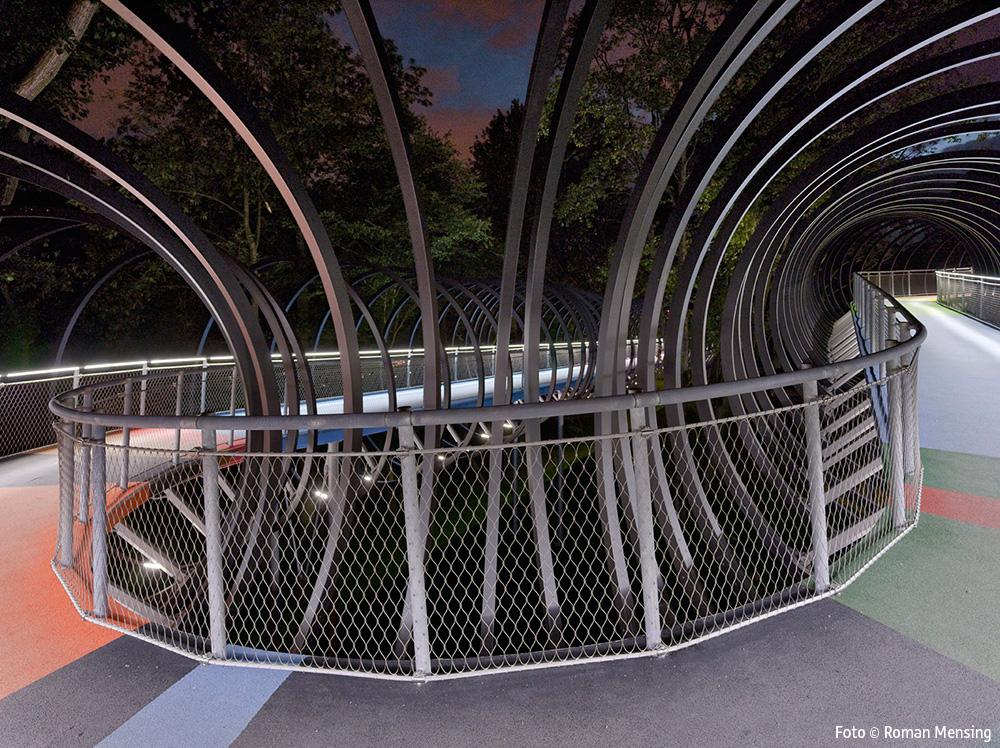
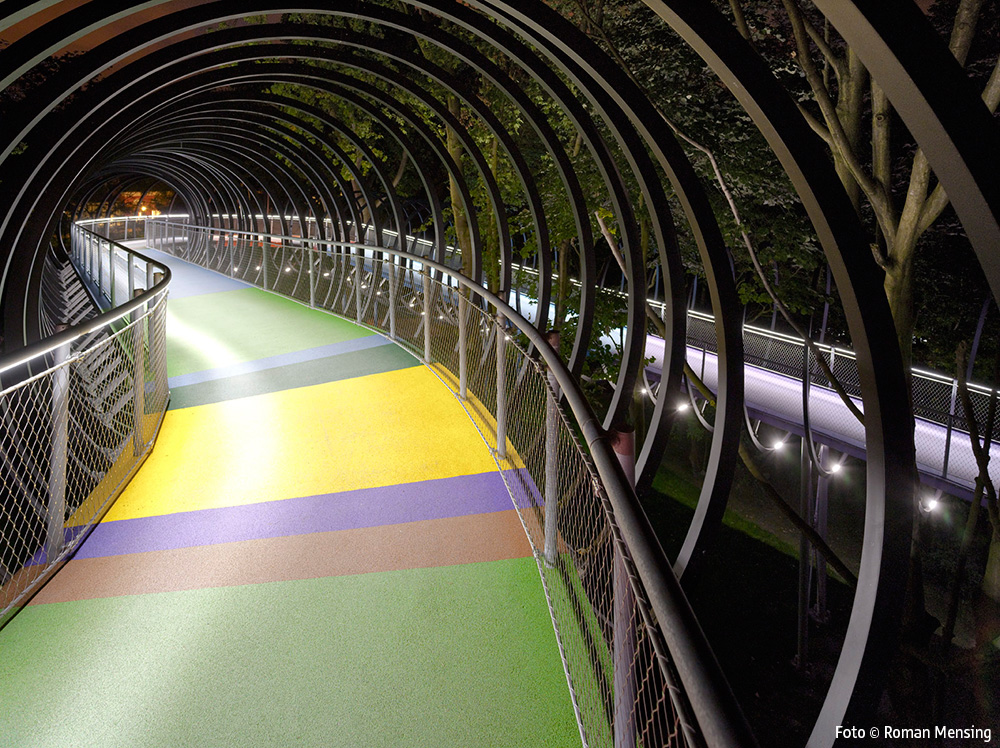
The construction was realized as a collaboration between the artist and the engineering firm Schlaich Bergermann und Partner. The design is based on a stressed ribbon bridge, which allowed for its more dynamic and weightless appearance. Long, winding entrances and exits make it look almost like a casually flung lasso, while the footpath displays sixteen different alternating colors.
In the dark, an LED lighting concept reflects the colors of the bridge. As in many of the artist’s works, sculpture, design, and architecture are combined to create a work that fulfills a practical function, while allowing for surprising sensory experiences.
Additional information: www.emscherkunst.de/kunst/kunstwerke/tobias-rehbergerslinky-springs-to-fame.html
Further reading:
Public Art Ruhr. Die Metropole Ruhr und die Kunst im öffentlichen Raum. Eds. Walter Smerling and Ferdinand Ulrich on behalf of the RuhrKunstMuseen, Cologne 2012, ISBN 978-3-8632-134-0, pp. 146–147.
Tobias Rehberger
← Zur Startseite
Oberhausen, Kaisergarten at Schloss Oberhausen, Konrad-Adenauer-Allee